The 1911 platform: the complete guide before you buy
Published on · Updated on · 9 min read · Anthony Baillon
Verified by a gunsmithThe 1911 is an all-steel pistol with a single-action-only trigger and a single-stack magazine: 7 to 9 rounds, 1,010 to 1,162 g, €820 to €2,520 in France. Barred from IPSC Production, it has its own division, Classic, and enters TAR; in 9mm it also opens ISSF 25 m.
At a glance
| 1911 in 9mm | 1911 in .45 ACP | |
|---|---|---|
| Capacity | 9 + 1 | 7 to 8 + 1 |
| IPSC Classic | Minor, 10 at the start | Major, 8 at the start |
| ISSF 25 m | Allowed | Excluded |
| Ammunition per year | €624 | €1,339 |
- New price: €820 to €899 for a Tisas Zig M, €2,340 to €2,520 for a Colt Gold Cup National Match.
- In TAR: a 1911 with fixed sights and a 5-inch barrel enters event 830.
- In .22 LR: replicas at €415 to €470, and conversion kits.
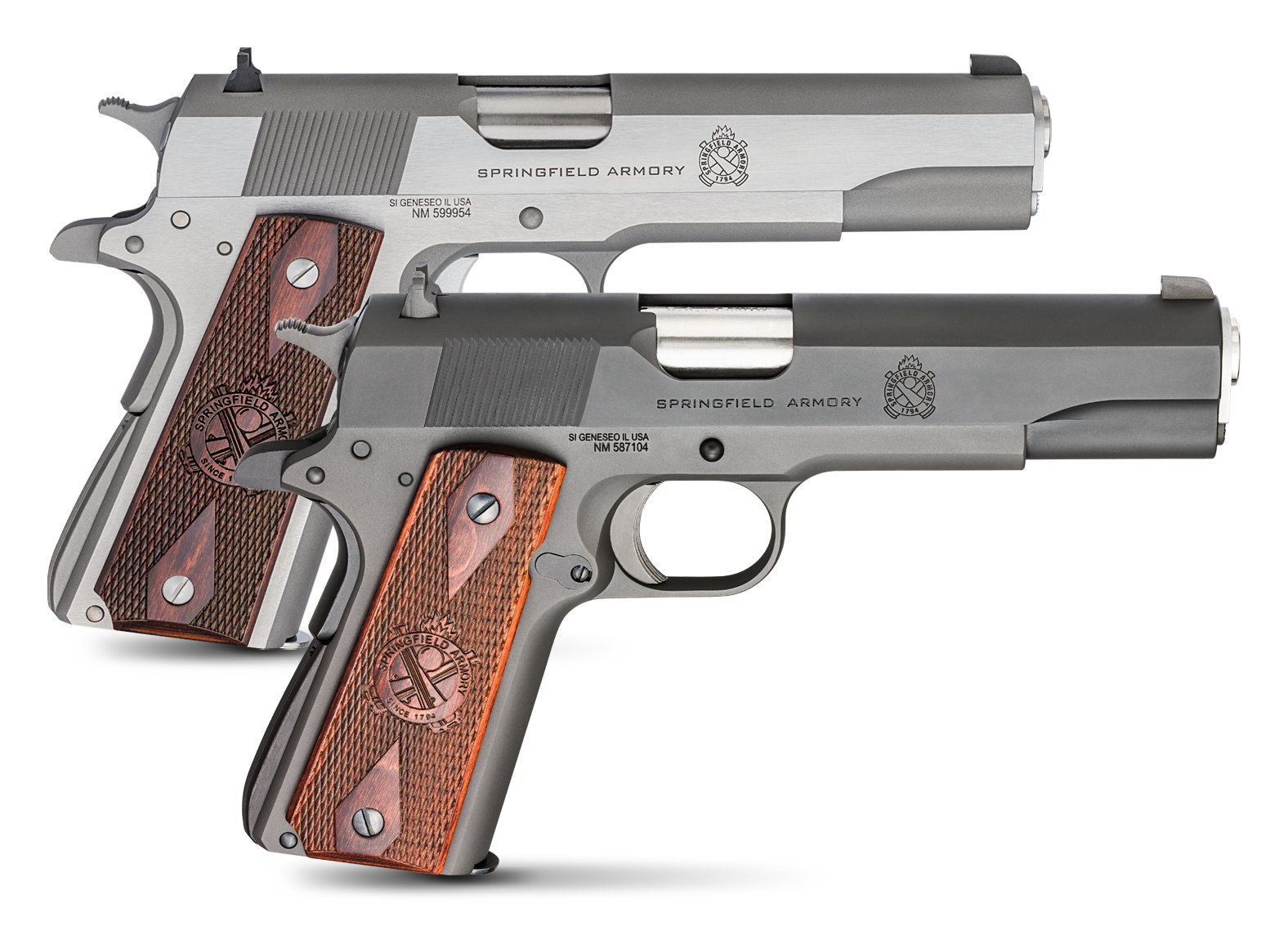
1911 pistol in 9mm or .45 ACP: pros and cons
1911 in 9mm
Pros
1911 in .45 ACP
Pros
A 1911 pistol: single action only, two safeties
The 1911 fires in single action only: the hammer must be cocked to fire, and the break is the same on every shot. Two safeties come on top3:
- The thumb safety, engaged with the pistol loaded, pushed down at the moment of firing.
- The grip safety, at the back of the grip, which the pressure of the hand disengages.
Springfield Armory's manual describes this order: chamber a round and engage the thumb safety, grip the pistol firmly to disengage the grip safety, then push the thumb safety down3. The three families of action are compared in our guide to double action, single action or striker-fired.
The trigger pull varies by maker: the retailer of the Tisas Zig M lists 2,500 g16. TAR requires at least 1,360 g9, ISSF 25 m 1,000 g10; IPSC Classic sets no minimum6. The details of a trigger break are in our trigger guide.
1911 capacity: 7 to 9 rounds, half a 2011
Capacity of a 1911 against range 9mm pistols
Rounds in the factory magazine, excluding the chambered round
IPSC Classic, reserved for single-stack 1911s, caps the magazine at 8 rounds in Major and 10 in Minor at the start signal. Sources1261314151617.
View the data
| Pistol | Capacity | Magazine | Action |
|---|---|---|---|
| Dan Wesson DWX | 19 + 1 | Double stack | Single action only |
| Staccato P | 17 + 1 | Double stack | Single action only |
| Glock 34 Gen5 | 17 | Double stack | Striker-fired |
| Beretta 92X Performance | 15 | Double stack | Double then single action |
| 1911 in 9mm | 9 + 1 | Single stack | Single action only |
| Tisas Zig M 1911 A1 in .45 ACP | 8 + 1 | Single stack | Single action only |
| Springfield 1911 Mil-Spec in .45 ACP | 7 + 1 | Single stack | Single action only |
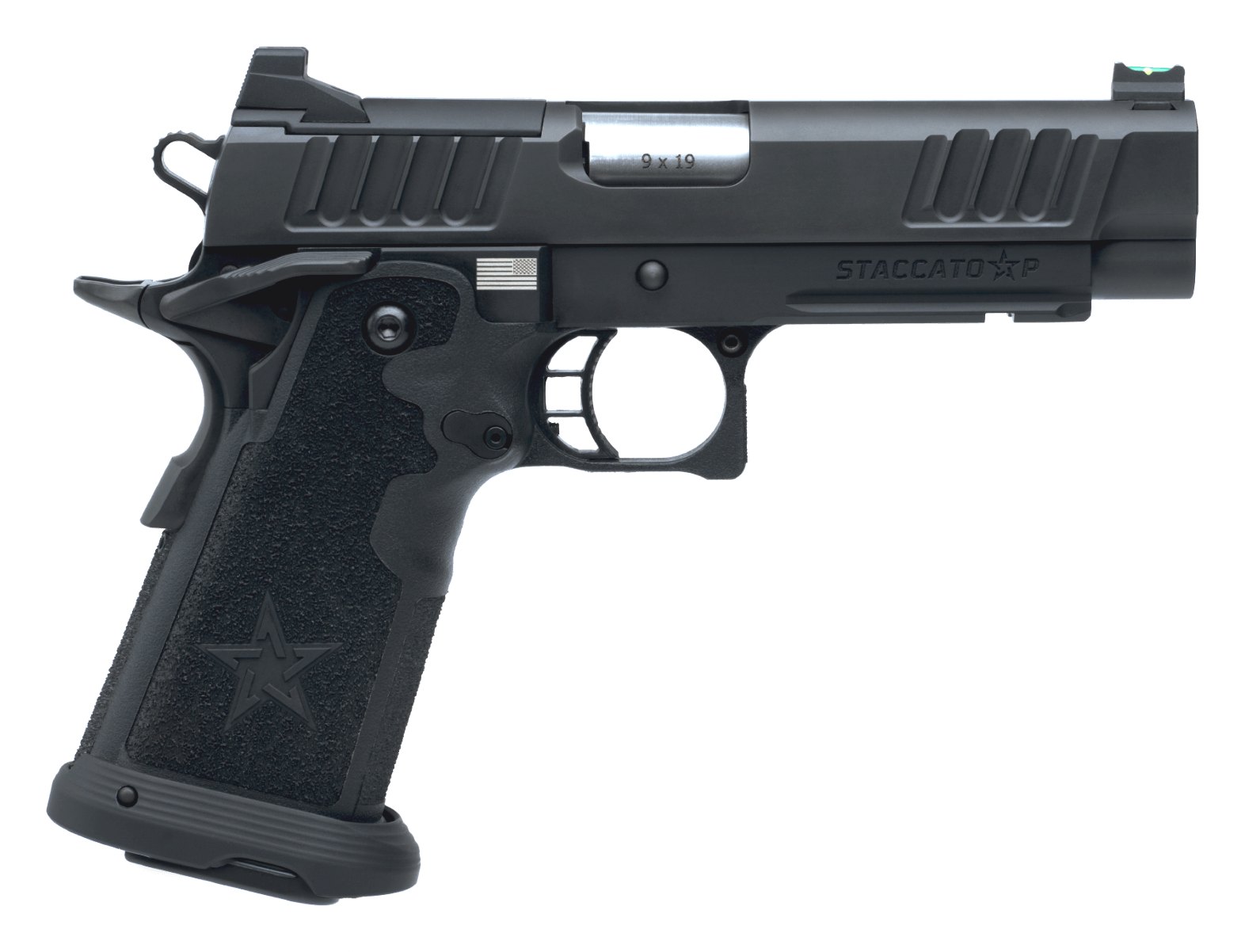
The single-stack magazine fits in a slim grip, but limits capacity: 7 rounds on a Springfield Mil-Spec in .45 ACP, 8 on a Tisas in .45, 9 in 9mm1216. A 2011 keeps the 1911's trigger but takes a double-stack magazine: 17 rounds on a Staccato P14.
In stages with reloads, IPSC Classic partly levels the field: it caps every magazine at 8 rounds in Major and 10 in Minor at the start signal6.
1911 pistol weight: 1,010 to 1,162 g, all steel
Weight of a 1911 against range 9mm pistols
Listed weight, in grams; 1911s are all steel
The 1911 weights come from Springfield Armory, except the Tisas, given by the retailer. Sources121314151619.
View the data
| Pistol | Weight | Barrel | Caliber |
|---|---|---|---|
| CZ Shadow 2 | 1,330 g | 120 mm | 9mm |
| Dan Wesson DWX | 1,276 g | 5 inches | 9mm |
| Springfield 1911 Ronin | 1,162 g (41 oz) | 5 inches | 9mm |
| Springfield 1911 Mil-Spec | 1,106 g (39 oz) | 5 inches | .45 ACP |
| Tisas Zig M 1911 A1 | 1,010 g | 5 inches | 9mm or .45 ACP |
| Staccato P | 936 g (33 oz) | 4.4 inches | 9mm |
| Glock 34 Gen5 | 743 g | 135 mm | 9mm |
Forged steel frame and slide, 5-inch barrel: Springfield Armory lists 39 ounces, or 1,106 g, for the Mil-Spec in .45 ACP, and 41 ounces, or 1,162 g, for the Ronin in 9mm12. The Tisas Zig M 1911 A1 is given at 1,010 g19.
A 1911 therefore weighs 74 to 226 g more than a Staccato P, and 168 to 320 g less than a CZ Shadow 21314.
1911 pistol in IPSC: Classic division, 8 or 10 rounds
French practical shooting, the TSV, follows the IPSC rulebook8. The 2026 edition prohibits single-action-only pistols in Production and Production Optics, and gives the 1911 a division of its own6; the Production list includes no 19117:
| IPSC division | 1911 | Condition |
|---|---|---|
| Classic | Allowed | 1911 profile, single stack, 8 rounds in Major, 10 in Minor |
| Standard | Allowed | 225 × 150 × 45 mm box, Major from 10 mm |
| Optics | Allowed | One red dot |
| Open | Allowed | Optic and compensator permitted |
| Production, Production Optics | Not allowed | Single action only |
Classic requires a one-piece metal frame, a single-stack magazine and a 1911 profile; it prohibits slide lightening cuts and limits the magwell to 35 mm wide6. In Standard as in Classic, Major is reserved for calibers of 10 mm and above: the .45 ACP qualifies, the 9mm does not6. The divisions are detailed in our article on IPSC and TSV in France.
1911 pistol in TAR and 25 m: fixed sights, 13 cm barrel
In TAR, French service-pistol shooting, event 830 "recent pistols" accepts pistols with a barrel of 13 cm at most, fixed open sights, a caliber from 7.62 to 11.60 mm and a break of at least 1,360 g9. It excludes fibre optics, protruding magwells and lightening cuts9. A 1911 with a 5-inch barrel and fixed sights, such as the Tisas Zig M or the Springfield Mil-Spec, qualifies119.
Event 832 "authentic pistols" accepts Colt 1911s and 1911 A1s that were in military service, in their original condition and caliber; recent versions are not allowed9.
In ISSF 25 m centerfire pistol, only the 9mm gets in: caliber is capped at 9.65 mm, weight at 1,400 g, and fibre-optic sights are prohibited10. The other disciplines are covered in our article on pistol eligibility by discipline.
1911 maintenance: very little oil
Springfield Armory's manual calls for light oiling after cleaning: "Only a very small amount of oil is needed to adequately lubricate moving parts and prevent rust"3. Excess oil attracts dust, which hampers function. Only stainless 1911s need slightly more lubricant than parkerized or blued models3.
Three steps after each session, according to the same manual3:
- Check that the pistol is unloaded, magazine out and chamber empty.
- Clean the barrel with solvent and a brush, then a dry patch.
- Wipe every surface with a lightly oiled cloth.
The whole routine is detailed in our pistol maintenance guide.
1911 pistol prices in France: from €820 to €2,520
| Model | Caliber | New price recorded |
|---|---|---|
| Tisas Zig M 1911 A1 | 9mm or .45 ACP | €820 to €899161920 |
| Springfield 1911 Mil-Spec | .45 ACP | €989 to €1,133161719 |
| Colt Gold Cup National Match | .45 ACP | €2,340 to €2,520161823 |
Colt also offers the Gold Cup National Match in 9mm and .38 Super4.
1911 pistol in .22 LR: replicas and conversion kits
Two routes exist to practice in .22 LR with the controls of a 1911:
- A .22 LR replica, such as the Mauser 1911-22, at €415 to €470 new2425.
- A conversion kit that replaces the upper half of an existing 1911; Advantage Arms offers them for frames "made to U.S. government mil-specs"5.
In .22 LR, ammunition comes to €312 a year bought by the case, at 200 rounds a month21. The caliber runs neither in IPSC, where the minimum is 9 mm6, nor in TAR pistol9. The choice between the two calibers is covered in our comparison of 9mm and .22 LR.
1911, 2011, Dan Wesson DWX: the gaps
- Against a 2011: same trigger, 17 rounds instead of 9, but Classic closed and a price starting at around €1,53961416.
- Against a Dan Wesson DWX: a 1911 trigger in a CZ 75 grip, 19 rounds, but neither Classic nor Production15.
- Against a CZ Shadow 2: 19 rounds, a first double-action shot, and access to Production13.
Our comparison of competition 9mm pistols sets these pistols side by side.
Budget for a 1911: €624 in 9mm, €1,339 in .45
| Item | Amount |
|---|---|
| Tisas Zig M 1911 A1 new | €820 to €899161920 |
| Springfield 1911 Mil-Spec new | €989 to €1,133161719 |
| Handgun safe | €115 to €2892627 |
| 9mm ammunition, at 200 rounds a month | €624 a year21 |
| .45 ACP ammunition, at 200 rounds a month | €1,339 a year2122 |
Leaving out the license and club fees, the first year comes to about €1,560 to €1,810 with a Tisas in 9mm, €2,270 to €2,530 with the same Tisas in .45 ACP. In the following years, ammunition remains the main item: €624 a year in 9mm at €0.26 a round, €1,339 in .45 ACP at about €0.56 a round2122.
The license, the club and the Category B authorization are costed in our first-year budget. In France, a 1911 is a Category B firearm, like every pistol, .22 LR included: buying one requires a prefectural authorization, and storing it a gun safe, a strong cabinet or a strongroom1112.
Buying a 1911 pistol: who it suits, and who less
What it brings, by objective
For IPSC Classic, a 1911 in .45 ACP brings Major power factor and 8 rounds per magazine. In return, its ammunition costs €1,339 a year at 200 rounds a month.
For TAR and 25 m, a 1911 in 9mm with fixed sights enters both events. In return, it runs as Minor in IPSC.
For IPSC Production, the 1911 does not fit: single action only is prohibited there. A CZ Shadow 2 or a polymer pistol is allowed.
For a first pistol, a Tisas costs €820 to €899; our criteria for choosing a first pistol take the question event by event.
Three misconceptions about the 1911 pistol
- "A 1911 should be drowned in oil." Springfield Armory's manual calls for very little oil and warns that excess attracts dust3.
- "The 1911 is banned from IPSC." It is excluded from Production, but Classic is reserved for it, and it runs in Standard, Optics and Open6.
- "The 1911 is a .45 ACP pistol." Springfield, Tisas and Colt all offer it in 9mm, which opens ISSF 25 m241016.
Sources 28 references
Specifications come from the manufacturers' sheets and manuals, or from the retailer when the manufacturer does not publish them; the rules, from the IPSC, ISSF and French federation rulebooks and from Légifrance in the edition stated; prices, from dated readings at several French gunsmiths, marked ⚠️ as commercial data. Click a reference number in the text to highlight the matching source.
- Springfield Armory — Defend Your Legacy Series 1911 Mil-Spec .45 ACP (PBD9108L), manufacturer sheet, re-read 24 September 2026: 5-inch "Forged Stainless Steel, Match Grade" barrel, forged parkerized steel slide and frame, "Fixed Combat 3-Dot" sights, "(1) 7-Round" magazine, weight 39 oz, length 8.6 in, height 5.5 in, list price $725.
- Springfield Armory — 1911 Ronin 9mm (PX9119L), manufacturer sheet, re-read 24 September 2026: model marked "Discontinued", 9 mm, 5-inch barrel, forged stainless steel frame, "Fiber Optic Front" sight, "(1) 9-Round" magazine, weight 41 oz, length 8.6 in; Ronin variants in 9 mm, 10 mm and .45 ACP.
- Springfield Armory — 1911 Operation & Safety Manual (PDF), re-read 24 September 2026: "Load shell into chamber from magazine and engage the thumb safety"; "The pressure from the hand will disengage grip safety located at top of rear grip area"; "Move thumb safety down taking gun off safety"; "Only a very small amount of oil is needed to adequately lubricate moving parts and prevent rust. Stainless Steel pistols require slightly more lubrication than parkerized or blued pistols. Accumulation of oil tends to attract dust and dirt"; barrel cleaning procedure with solvent, brush and then dry patch, surfaces wiped with a lightly oiled cloth; "Be certain firearm is unloaded before cleaning".
- Colt — Gold Cup Family, manufacturer range, re-read 24 September 2026: Gold Cup National Match offered in .45 ACP, 9 mm and .38 Super, $1,549 each; Gold Cup and Gold Cup Trophy in 9 mm, .38 Super and .45 ACP.
- Advantage Arms — conversion kits for 1911, catalogue re-read 24 September 2026: .22 LR Standard, Target, Commander and Mini kits, "designed to fit any full size 1911-A1 frame made to U.S. government mil-specs". ⚠️ US catalogue, no euro prices.
- IPSC — IPSC Handgun Competition Rules, Jan 2026 Edition, Final 29 Dec 2025, link published by the official IPSC Rule Books page, re-read 24 September 2026: minimum calibre 9 mm in all divisions; appendix D3 (Classic) — Major 170, "Minimum bullet caliber for Major 10 mm", 225 × 150 × 45 mm box, "Handguns must be based on and visibly resemble the profile and contours of the classic 1911-genre design. This means a single-stack, one piece metal frame", magwell 35 mm wide at most, "Prohibited modifications / parts are slide lightening cuts", "not contain more than 8 rounds (for Major power factor) or 10 rounds (for Minor power factor) at the Start Signal", no minimum trigger pull; appendix D2 (Standard) — 225 × 150 × 45 mm box, Major reserved for calibres of 10 mm and above, no optic; appendices D4 and D4a (Production, Production Optics) — "handguns deemed by IPSC to be single-action-only are expressly prohibited"; appendix D6 (Optics) — optic required; appendix D1 (Open) — optics and compensators allowed.
- IPSC — Production Division List, "Updated: 2026-03-09", re-read 24 September 2026: no single-action-only 1911; STI "NOT APPROVED: single-action-only models".
- Fédération française de tir — Règlement administratif du tir sportif de vitesse, saison 2019-2020 (PDF, in French), article I: discipline « régie au niveau international par l'IPSC » [governed internationally by IPSC].
- Fédération française de tir — Règlement TAR, saison 2025-2026 (PDF, in French, issued 12 January 2026), re-read 24 September 2026: « La longueur du canon des pistolets automatiques ne peut dépasser 13cm » [the barrel of semi-automatic pistols may not exceed 13 cm], fixed open sights, trigger pull « ne peut être inférieur à 1,360 kg » [may not be under 1.360 kg]; event 830 « armes récentes » [recent pistols], calibres from 7.62 to 11.60, including 9 mm Parabellum and .45 ACP; not allowed in 830: « Tout allègement de l'arme d'origine ou non » [any lightening, factory or not], « Tous systèmes de visée de type laser et fibre optique » [all laser and fibre-optic sighting systems], « Puits de chargeur proéminents » [protruding magwells]; event 832 « armes authentiques » [authentic pistols], « armes ayant été en dotation dans une armée en conflit jusqu'en 1970 […] dans leur état et dans leur calibre d'origine. Les versions récentes de ces armes ne sont pas autorisées » [firearms issued to an army at war up to 1970, in their original condition and calibre; recent versions not allowed], list including the Colt 1911 and 1911 A1.
- Fédération française de tir — Règles Pistolet ISSF, mise à jour 08/2026 (PDF, French translation of the 2025 edition, second print in force from 1 July 2026), re-read 24 September 2026: 8.4.3.3 — « Tout pistolet de calibre compris entre 7,62mm et 9,65mm (.30'' à .38'') à percussion centrale » [any centrefire pistol of calibre between 7.62 mm and 9.65 mm]; 8.4.1.2 a — fibre-optic sights prohibited; table 8.12, 25 m pistol — 1,400 g at most, 300 × 150 × 50 mm box, barrel of 153 mm at most, trigger of at least 1,000 g.
- Légifrance — article R311-2 du code de la sécurité intérieure (in French), version in force on 7 September 2025: category B, II, 1° « armes à feu de poing et armes converties en armes de poing non comprises dans les autres catégories » [handguns and weapons converted into handguns not included in the other categories].
- Légifrance — article R314-3 du code de la sécurité intérieure (in French), in force since 11 May 2017: Category A and B firearms stored « soit dans des coffres-forts ou des armoires fortes adaptés au type et au nombre de matériels détenus » [either in safes or strong cabinets suited to the type and number of items held], or in a strongroom. See also Service-public.gouv.fr, fiche F2250 (in French), checked 20 March 2025.
- CZ — CZ Shadow 2, manufacturer specification sheet, re-read 24 September 2026: trigger pull 15 N in single action and 46 N in double action; consulted 20 August 2026 for the 1,330 g weight with an empty magazine, the 120 mm barrel and the listed capacity of 19 + 1; the CZ Shadow 2 appears on the IPSC Production Division List updated 9 March 2026.
- Staccato — Staccato P, manufacturer specification sheet, re-read 24 September 2026: 9x19 mm, "17+1 or 20+1 Capacity", "33 oz For Steel", "4140 Steel" frame, single action.
- Dan Wesson — DWX (SKU 92003), manufacturer sheet, re-read 24 September 2026: stainless steel frame, 5-inch barrel, weight 45 ounces, "10+1", "19+1", single action; CZ — Dan Wesson DWX, 19 December 2022: "Combining the perfection of the 1911 trigger with the ergonomics of the CZ 75". Glock — G34 Gen5 MOS, re-read 24 September 2026: 17 rounds, 743 g with an empty magazine. Beretta — 92X Performance manual (latest edition June 2022): 15 rounds.
- Le Pistolier — prices recorded 24 September 2026: Tisas Zig M 1911 A1 5" €899.00, « disponible en 45 ACP ou 9x19 mm » [available in .45 ACP or 9x19 mm], « Poids de départ détente de 2.5 kg » [trigger pull 2.5 kg], « Capacité : 8+1 coups (45 ACP) 9+1 coups (9x19 mm) » [capacity 8+1 in .45 ACP, 9+1 in 9x19 mm]; Springfield 1911 Mil-Spec Black €1,039.00; Colt 1911 Gold Cup National Match €2,349.00; Tisas 2011 Duty €1,539.00. ⚠️ Commercial data.
- Armurerie Douillet — pistolet Springfield Armory 1911 Mil-Spec Black 5″ .45 ACP, price recorded 24 September 2026: €989.00. ⚠️ Commercial data.
- Armurerie Lavaux — pistolet Colt 1911 Gold Cup National Match .45 ACP, price recorded 24 September 2026: €2,339.95. ⚠️ Commercial data.
- Armurerie Auxerre — prices recorded 24 September 2026: pistolet Tisas Zig M 1911 A1 Parkerisé, « À partir de 819,90 € » [from €819.90], 5-inch barrel (125 mm), fixed rear and front sights, fibre optic « Non » [no], « Poids du produit 1010 » [product weight 1010], « 9x19 mm - 9 coups | .45 ACP - 8 coups » [9 rounds in 9x19 mm, 8 in .45 ACP]; Springfield 1911 Mil-Spec .45 ACP 5" €1,133.00. ⚠️ Commercial data; the Tisas weight is the retailer's, with no indication about the magazine.
- Armurerie Gilles — Tisas Zig M1911 A1 Noir Parkerisé 5", .45 ACP ou 9 mm, price recorded 24 September 2026: €825.00. ⚠️ Commercial data.
- Armurerie Centrale — 1 000 cartouches STV Scorpio 9 mm Luger 124 gr FMJ, price recorded 24 September 2026: €259.00 including VAT, or €0.26 a round; at 200 rounds a month, 2,400 rounds and €624 a year. 50 cartouches Fiocchi FMJ .45 ACP 230 grains €27.90 instead of €29.90, or €0.558 a round and €1,339 a year at 200 rounds a month; 1 000 munitions STV Scorpio FMJ .45 ACP €589.00. .22 LR comes to €0.13 a round in cases of 400 to 500, or €312 a year at the same volume (reading of 30 July 2026, taken from our first-pistol guide). ⚠️ Commercial data.
- Armurerie Auxerre — prices recorded 24 September 2026: 50 munitions Magtech .45 ACP FMJ €28.30; 50 munitions Fiocchi FMJ 230 gr .45 ACP €28.80. ⚠️ Commercial data.
- Armurerie de la Bourse — pistolet Colt National Match Gold Cup .45 ACP 5" bronzé, price recorded 24 September 2026: €2,520.00. ⚠️ Commercial data; shown as out of stock that day.
- Armurerie Douillet — pistolet Mauser 1911-22 neuf, price recorded 24 September 2026: €415.00 instead of €465.00. ⚠️ Commercial data, promotional price displayed.
- Armurerie Auxerre — pistolet Mauser 1911 .22 LR noir, price recorded 24 September 2026: €470.00. ⚠️ Commercial data.
- Armurerie Loisir — prices recorded 24 September 2026: coffre-fort Fortify Delta 1 pour arme de poing €115.00; coffre-fort Infac C3A €259.00. ⚠️ Commercial data.
- Safepro24 France — handgun safes, prices recorded 24 September 2026: Rottner GunBox €68.90, Profirst NY 2 €289.00 instead of €374.95. ⚠️ Commercial data.
- Images — manufacturer renders and photographs, reproduced without retouching, cropped to their content: Springfield Armory, 1911 Mil-Spec; Staccato, Staccato P.
The platform covers very different builds. The same name covers entry-level replicas and match pistols, in 9mm, .38 Super or .45 ACP, with or without fibre optics: eligibility for TAR and Classic is judged on the exact pistol. When in doubt, the club's range officer settles it before the gunsmith does.
Frequently asked questions
A 1911 in 9mm or in .45 ACP?
The two calibers open different events. In .45 ACP, the 1911 runs as Major in Classic and Standard, but falls outside ISSF 25 m centerfire pistol, capped at 9.65 mm, and its ammunition costs about €0.56 a round, or €1,339 a year at 200 rounds a month. In 9mm, it takes one more round, runs as Minor, enters ISSF 25 m, and its ammunition comes to €624 a year.
Is a 1911 allowed in Production division?
No. The 2026 IPSC rules expressly prohibit single-action-only pistols in Production and Production Optics. The 1911 does, however, have its own division, Classic, reserved for 1911-profile pistols with a single-stack magazine: 8 rounds at most at the start in Major, 10 in Minor. It also runs in Standard, in Optics with a red dot and in Open.
How much does a 1911 cost in France?
From €820 to €899 for a Tisas Zig M 1911 A1, €989 to €1,133 for a Springfield 1911 Mil-Spec in .45 ACP, and €2,340 to €2,520 for a Colt Gold Cup National Match, at prices recorded on 24 September 2026 at several French gunsmiths.
Is there a 1911 in .22 LR?
Yes. .22 LR replicas of the 1911, such as the Mauser 1911-22, sell new for €415 to €470. .22 LR conversion kits also exist for 1911 frames built to US military specifications. In .22 LR, the 1911 runs neither in IPSC nor in TAR pistol, but the ammunition budget falls to €312 a year bought by the case.
Does a 1911 need a lot of oil?
No. Springfield Armory's manual calls for light oiling after cleaning: a very small amount is enough to lubricate the moving parts and prevent rust, and excess oil attracts dust that hampers function. Only stainless 1911s need slightly more lubricant than parkerized or blued models.
Do you need an authorization to buy a 1911 in France?
Yes. Like every pistol, .22 LR included, a 1911 is a category B firearm under French law: a sport shooter can only buy one with an authorization from the prefect, applied for online after three supervised shooting sessions. Four to seven months usually pass between the license and the purchase, and the pistol must then be stored in a gun safe, a strong cabinet or a strongroom.