Pistol trigger for sport shooting: weight, reset, adjustment, rules
Published on · Updated on · 6 min read · Anthony Baillon
Verified by a gunsmithA trigger is described by four parameters: take-up, wall, overtravel and reset. Its pull weight runs from 1,134 to 2,549 g on factory sport shooting 9mm pistols, and up to 4,691 g on a double-action first shot. The rulebooks set a minimum: 1,000 g in ISSF 25-meter events.
At a glance
| Action | Factory pull | Strength and limit |
|---|---|---|
| Single action only | 1,134 to 1,900 g | ✓ Light break, short reset ✗ Carried cocked: manual safety |
| Double and single action | 3,000 to 4,691 g, then 1,500 to 1,530 g | ✓ Heavy, safe first shot ✗ Two breaks to master |
| Striker-fired | 2,447 to 2,549 g | ✓ The same break every shot ✗ Heavier, longer reset |
- ISSF minimums: 500 g at 10 meters, 1,000 g at 25 meters, none at 50 meters. In IPSC Production: 2,270 g on the first shot, or 1,360 g on every shot.
- Lightening: gunsmith work, proven on the range with the ammunition actually used.
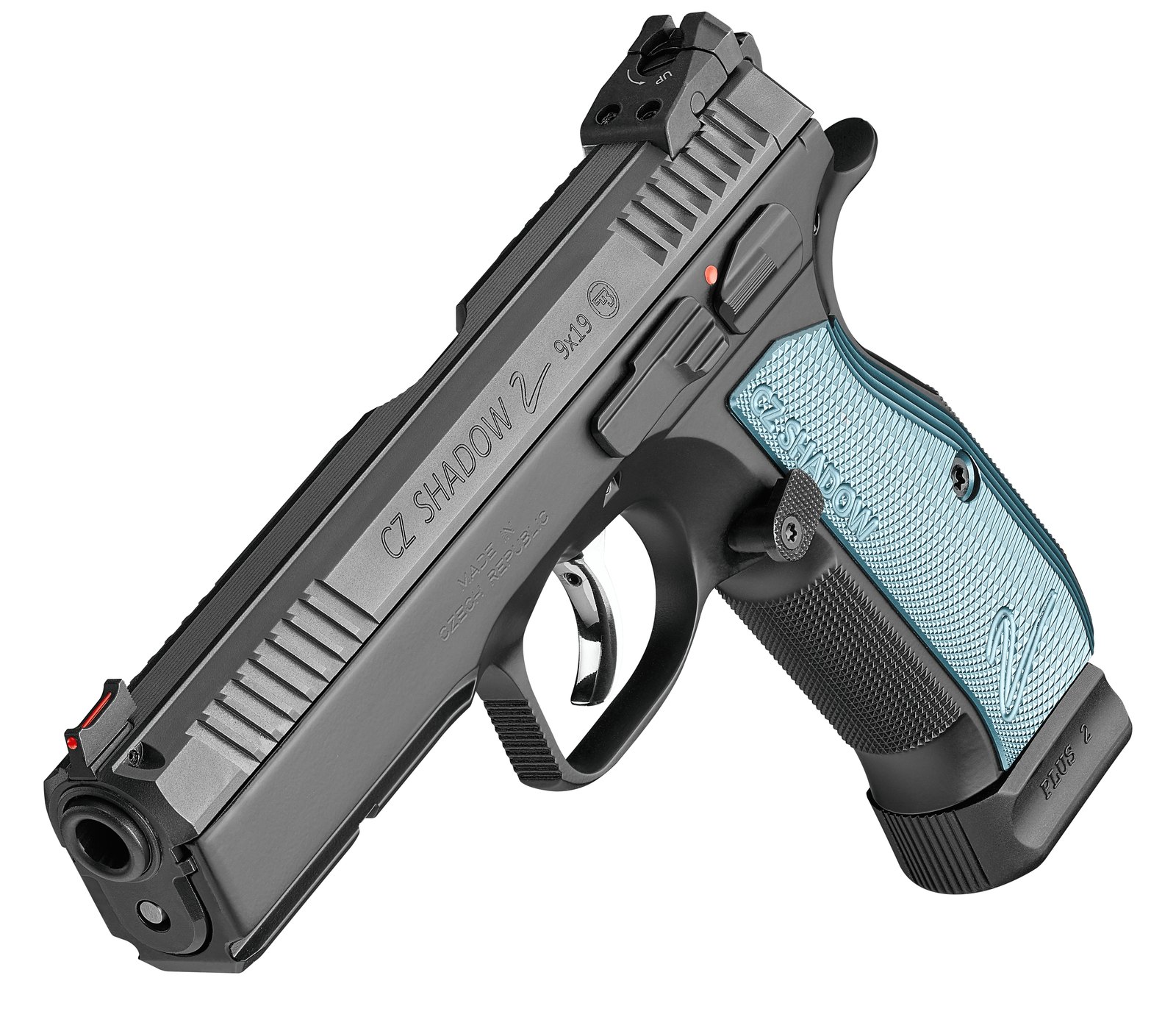
Pistol trigger: four parameters, not one weight
Pull weight describes only part of a trigger.
| Parameter | What it is | What it changes |
|---|---|---|
| Take-up | The travel before the point of resistance | The length of the finger's movement |
| The wall | The firm resistance just before the break | How crisp the break is |
| Overtravel | The travel after the break | The movement passed on to the pistol |
| Reset | The return needed before the next shot | Speed in strings of shots |
On an adjustable competition trigger, take-up and overtravel are reduced by screws, independently of each other. Reset, on the other hand, depends mostly on the action: it is shortest on single-action-only pistols, such as the 2011s.
Factory trigger pull weight: from 1,134 to 4,691 g
Trigger pull of sport shooting 9mm pistols, in grams
For double-action pistols, single-action pull after cocking; the last two bars are double-action first shots
Conversions: 1 pound = 453.6 g; 1 newton = 102 g. On double-action pistols, only first shots break at the weight of the last two bars; the following shots break at the single-action weight12.
View the data
| Pistol and mode | Trigger pull | Action |
|---|---|---|
| Staccato XC | 1,134 g | Single action only |
| Dan Wesson DWX | 1,474 g | Single action only |
| Beretta 92X Performance | 1,500 g | Single action, after cocking |
| CZ Shadow 2 | 1,530 g | Single action, after cocking |
| Springfield Prodigy | 1,900 g | Single action only |
| Glock 34 Gen5 | 2,447 g | Striker-fired |
| Walther PDP | 2,500 g | Striker-fired |
| Walther Q5 Match SF | 2,549 g | Striker-fired |
| Beretta 92X Performance | 3,000 g | Double action, first shot |
| CZ Shadow 2 | 4,691 g | Double action, first shot |
Two kinds of value sit side by side in this chart. Single breaks, identical every shot, run from 1,134 g on a Staccato XC3 to 2,549 g on a Walther Q5 Match6. Double-action first shots play in another league: 3,000 g on a Beretta 92X Performance2, 4,691 g on a CZ Shadow 21, before following shots at 1,500 and 1,530 g.
The Glock 34 is stated at 24 N, i.e. 2,447 g7, the Walther PDP at 2,500 g5.
Trigger by action type: pros and cons
The action sets the kind of break available, before any adjustment. The details, first shot and following shots, are in our guide to single action, double action and striker-fired.
Single action only
Pros
Cons
- The hammer stays cocked between shots: safety relies on a manual safety.
- A light break demands discipline: the finger stays outside the trigger guard until the sights are on target.
Double and single action
Pros
Cons
- Two breaks to master: the transition from the first shot to the second often shifts the point of impact.
Striker-fired
Pros
- The same break every shot, from the first to the last.
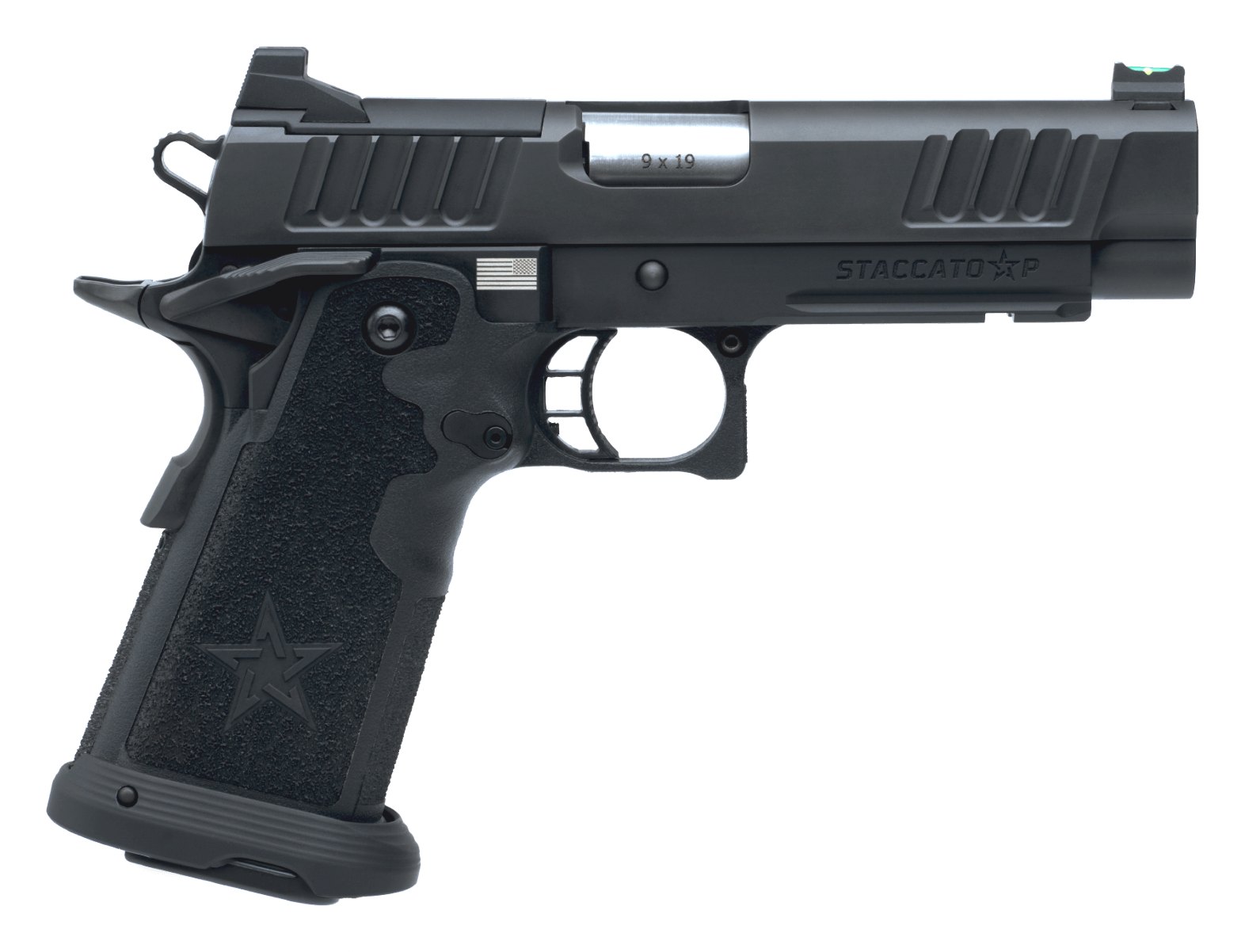
Minimum trigger weight: 1,000 g at ISSF 25 meters
The rulebooks set a minimum weight, checked with a dead weight. Action shooting follows the IPSC rulebook12, in which only the Production and Production Optics divisions impose a minimum10.
| Event | Minimum trigger weight |
|---|---|
| 10 m air pistol | 500 g9 |
| 25 m pistol, rimfire and centerfire | 1,000 g9 |
| 50 m pistol | None9 |
| IPSC Production and Production Optics | 2,270 g on the first shot, or 1,360 g on every shot10 |
| IPSC Open, Standard, Optics | None10 |
| TAR, pistol at 25 m | 1,360 g11 |
The ISSF check uses a dead weight hung from the middle of the trigger, barrel vertical; three attempts are allowed, and random checks take place after the last series9. The minimum applies throughout the competition: a trigger set right at the threshold can fail the after-match check.
Lightening a trigger: the risk of light primer strikes
On a striker-fired pistol, lightening the pull often goes through a weaker striker spring. The striker then hits the primer less hard. The risk is a failure to fire: the primer receives too weak a blow and the round does not go off, especially with hard primers.
To limit that risk:
- Shoot several sessions with the factory trigger, which often smooths out with break-in.
- Leave the work to a gunsmith, one modification at a time, without mixing parts from different makers.
- Prove it on the range, over several dozen rounds of the ammunition actually used.
- Weigh the resulting pull before a competition, against the event's minimum.
A round that does not fire is handled like a hangfire: pistol towards the target, a wait, then a check of the barrel. See pistol malfunctions and their causes.
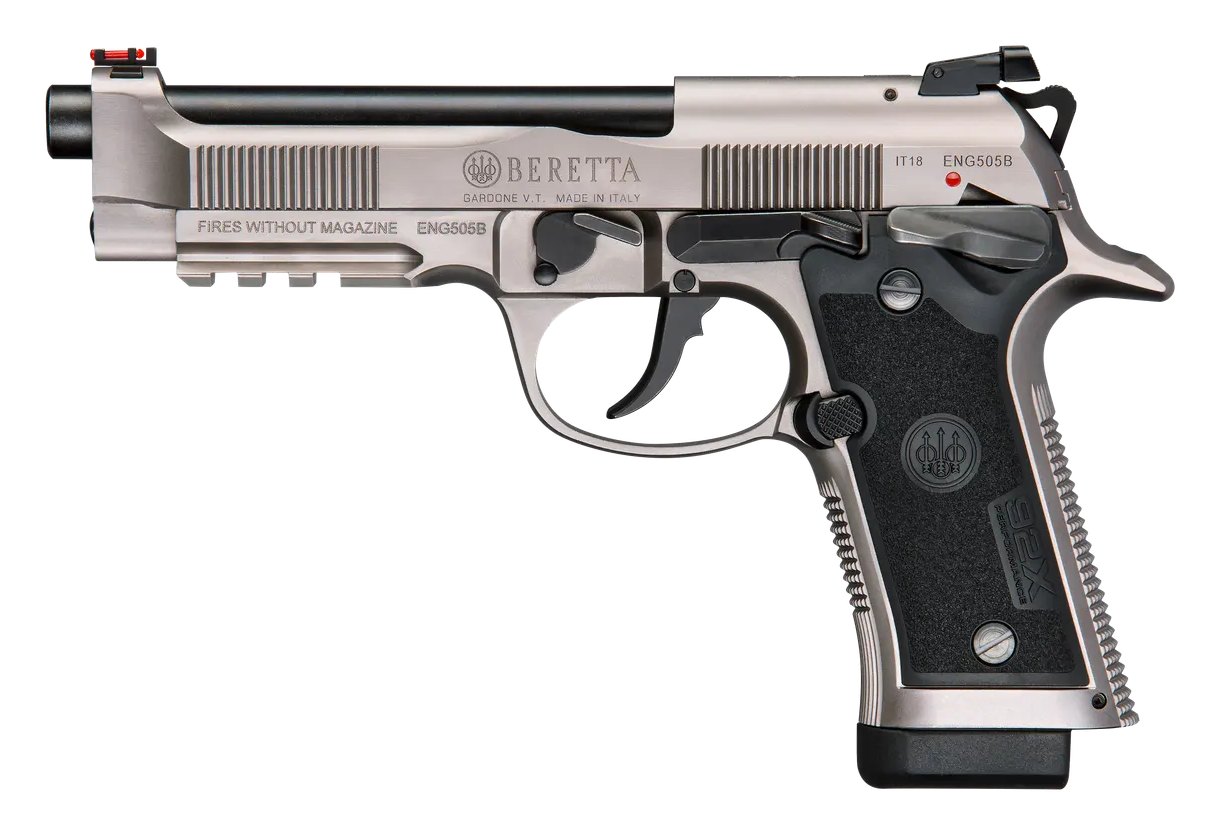
Trigger by discipline: crisp at 25 m, short for speed
What you gain, what you give up
For precision at 25 meters, a crisp break and a firm wall count more than lightness: the 1,000 g minimum leaves margin under every factory pull cited. In return, a trigger worked too far comes close to the threshold checked after the match.
For action shooting, the short reset of single action only brings the most. In return, the pistol is carried cocked, with a safety to operate. In Production division, the minimum of 2,270 g on the first shot, or 1,360 g on every shot, limits how far the trigger can be lightened10.
For a first pistol, the factory trigger is enough: the gap with a worked trigger weighs less than volume of practice. Choosing a first pistol comes down to other criteria first.
Three misconceptions about the pistol trigger
- "Lighter means more accurate." A light break that is poorly controlled goes off before the sight picture is complete. At ISSF 25 meters, it cannot go below 1,000 g anyway9.
- "Weight is enough to describe a trigger." Two breaks of the same weight differ in take-up, wall and reset.
- "A lightened trigger stays compliant." A trigger taken below the event's minimum makes the pistol non-compliant, however good the work.
Sources 13 references
Pull weights come from manufacturer spec sheets and specialist press reviews, converted into grams; minimums come from the ISSF and IPSC rulebooks in the edition stated. Click a note marker in the text to highlight the matching source.
- CZ — CZ Shadow 2, manufacturer spec sheet, reread on 24 September 2026: "DA 46 N / SA 15 N", i.e. 4,691 g in double action and 1,530 g in single action.
- NRA Shooting Sports USA — Beretta 92X Performance review: triggers stated by Beretta at 1.5 kg in single action and 3.0 kg in double action.
- Small Arms Review — Staccato XC review: single-action pull of 2.5 pounds (1,134 g).
- American Firearms — Springfield Prodigy review: pull measured with a gauge at 4 pounds 3 ounces (1,900 g). ⚠️ Specialist press, measured value.
- Carl Walther — PDP Full Size 5" (ref. 2851776), manufacturer spec sheet, reread on 24 September 2026: trigger weight 2,500 g, the same value on the sheets of the other PDPs (Match Polymer, F-Series, Steel Frame).
- Walther — official Q-Series brochure (PDF), Q5 Match SF table (ref. 283 01 41): trigger documented at 25 N (2,549 g).
- Glock — G34 Gen5 MOS, manufacturer spec sheet, consulted on 20 August 2026: trigger weight 24 N (2,447 g), trigger distance 70 mm.
- CZ — Dan Wesson DWX, presentation by the group that owns the brand, 19 December 2022, reread on 24 September 2026: "you simply have to press 3.25 pounds of effort to drop the hammer", i.e. 1,474 g.
- Fédération française de tir — Règles Pistolet ISSF, mise à jour 08/2026 (PDF, in French; translation of the 2025 edition, second printing in force on 1 July 2026, updated by the CNS Arbitrage on 4 July 2026), reread on 24 September 2026: table 8.12 — « 500g min. » at 10 m, « 1000g min. » at 25 m, no restriction at 50 m; rule 8.4.2 — dead weight hung from the middle of the trigger, barrel vertical, three attempts at most, minimum maintained throughout the competition; rule 8.4.2.3 — random checks after the last series. Same values in the ISSF Rule Book, Second Print 07/2026.
- IPSC — IPSC Handgun Competition Rules, Jan 2026 Edition, Final 29 Dec 2025, link published by the official IPSC Rule Books page, reread on 24 September 2026: appendices D4 and D4a (Production, Production Optics), item 16 — "2.27kg (5lbs.) for the first shot fired and no restriction for subsequent shots fired, or 1.36kg (3lbs.) for every shot fired"; no minimum in appendices D1 (Open), D2 (Standard) and D6 (Optics). ⚠️ The interpretations published in February and May 2026 were not reread.
- Fédération française de tir — Règlement TAR, saison 2025-2026 (PDF, in French, issued 12 January 2026, approved by the board on 6 December 2025), reread on 24 September 2026: trigger weight of 1.360 kg in the summary table of the 25 m pistol events (830, 831, 832), five rounds per magazine.
- Fédération française de tir — Règlement administratif du tir sportif de vitesse, saison 2019-2020 (PDF, in French), article I: discipline « régie au niveau international par l'IPSC » [governed internationally by IPSC]; article VII: « seul le règlement officiel de l'IPSC en anglais est valable sur les compétitions de Niveau III et plus » [only the official English IPSC rulebook is valid at Level III matches and above].
- Visuals — manufacturer renders and photographs, reproduced without retouching, cropped to their content: CZ, CZ Shadow 2; Staccato, Staccato P; Beretta, 92X Performance Production.
Any work on a trigger is gunsmith work. A lightened pull affects safety, ignition reliability and the pistol's compliance all at once. The resulting weight is checked before entering an event.
Frequently asked questions
What are take-up and overtravel on a trigger?
They are the two travels either side of the break. Take-up is the distance the trigger moves before the point of firm resistance, the wall. Overtravel is what the trigger still moves after the shot breaks. On an adjustable competition trigger, both are reduced by screws, which shortens the finger's movement.
What is trigger reset?
It is the distance the finger lets the trigger return before the pistol can fire again. The shorter and more positive it is, the faster shots follow one another: it is the parameter that counts most in action shooting, more than the pull weight.
What is the minimum trigger weight in competition?
In ISSF pistol, 500 g at 10 meters air pistol and 1,000 g in 25-meter events, checked with a dead weight before and after the match; 50 meters sets no minimum. In action shooting, IPSC Production division requires 2,270 g on the first shot, or 1,360 g on every shot; TAR requires 1,360 g.
Can you lighten your pistol's trigger?
Yes, at a gunsmith's, with two limits. On a striker-fired pistol, lightening often goes through a weaker striker spring, which hits the primer less hard: the risk is a failure to fire, especially with hard primers. And a trigger taken below the event's minimum makes the pistol non-compliant.
Is the factory trigger good enough to start with?
In most cases, yes. Factory pulls on sport shooting pistols run from 1,134 to 2,549 g, all above the ISSF 25-meter minimum. For an improving shooter, volume of practice weighs more than the gap between a factory trigger and a worked one.