DA/SA, single action only or striker-fired: which to choose
Published on · Updated on · 6 min read · Anthony Baillon
Verified by a gunsmithThree actions share sport shooting. Single action only offers the lightest break; double then single action, a heavy first shot followed by very light breaks; striker-fired, the same break on every shot. None is better in absolute terms: the discipline decides.
At a glance
| Action | Trigger pull | Strength and limit |
|---|---|---|
| Single action only | 1,134 to 1,474 g, every shot | ✓ The lightest break ✗ Hammer cocked, safety to manage |
| Double then single action | 3,000 to 4,691 g on the first shot, then 1,500 to 1,530 g | ✓ Very light following shots ✗ Two triggers to master |
| Striker-fired | 2,447 to 2,500 g, every shot | ✓ One break to learn ✗ Heavier than a single action |
Trigger pulls of the six pistols compared below.
- One break to learn with single action only and striker-fired; two with double action.
- In dry fire, only double action runs press after press without cycling the slide.
- The discipline decides: the first shot matters in precision, much less in dynamic shooting.
Single action, double action, striker-fired: pros and cons
A word of vocabulary first: on a modern pistol, the hammer strikes the firing pin, which strikes the primer. A hammer that strikes the primer directly belongs to older designs.
Single action only
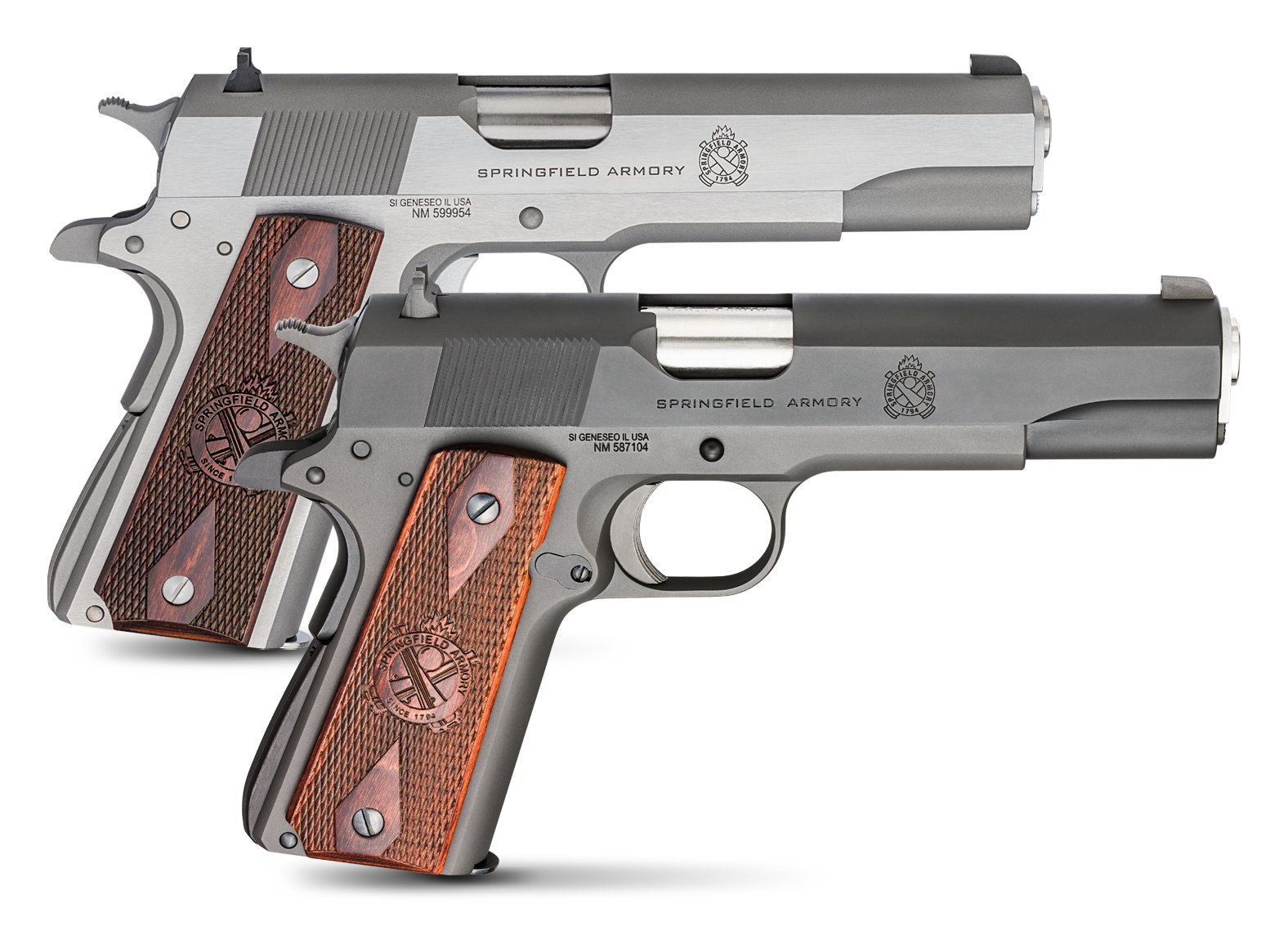
The hammer must be cocked for the pistol to work, and the trigger only releases it. That is the principle of the 1911 platform, from which the Staccato and the 2011s descend, as does the Dan Wesson DWX.
Pros
Cons
- One more control to handle: on the 1911 platform, the cocked hammer goes with a thumb safety.
- In dry fire, the slide is cycled after each press: nothing else recocks the hammer.
Double then single action
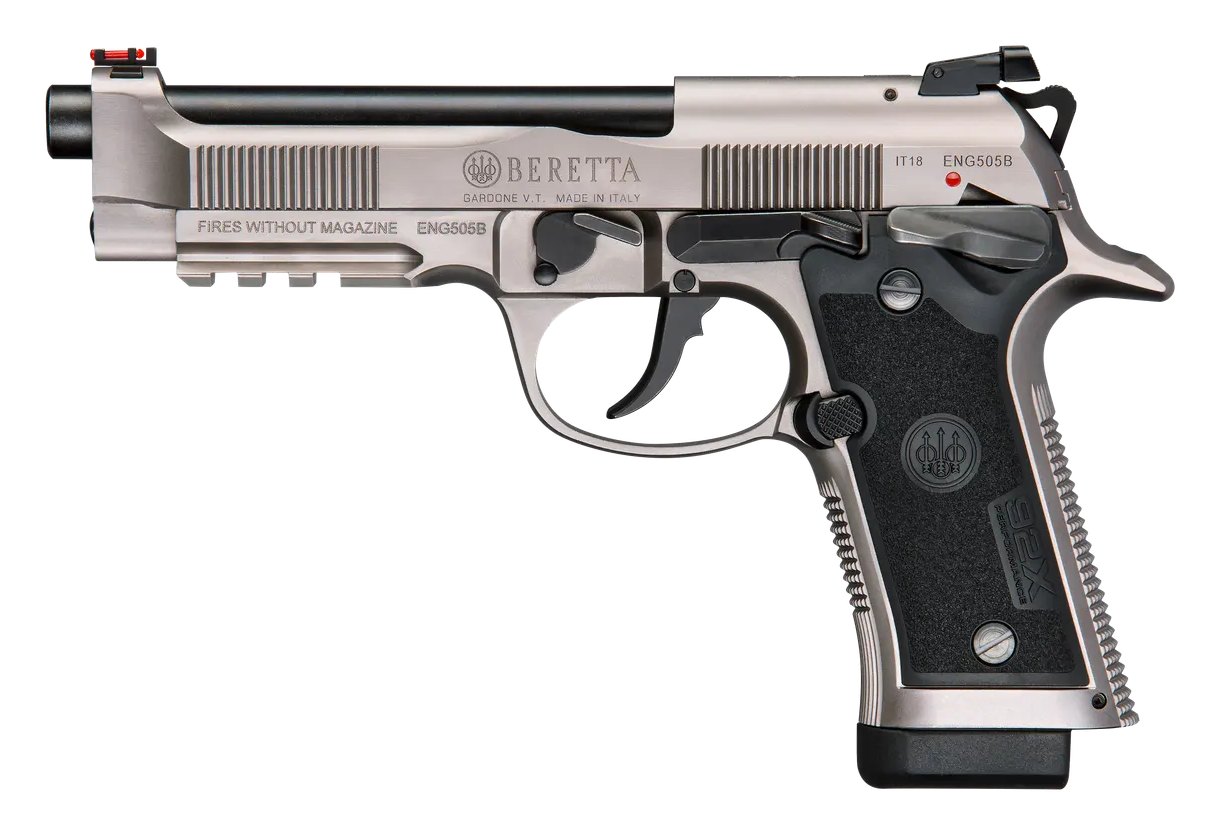
The first shot breaks in double action: the pull cocks the hammer and then releases it, which makes it long and heavy. The recoil then recocks the hammer, and the following shots break in single action. That is the principle of the CZ Shadow 2 and the Beretta 92X Performance.
Pros
Cons
- Two triggers to master: the first shot weighs 3,000 to 4,691 g, two to three times the following ones13.
- One more control: decocker or manual safety, depending on the version2.
- Recocking that depends on the ammunition: a load that is too weak may fail to recock the hammer. Our guide to 9mm bullet weights covers this.
Striker-fired
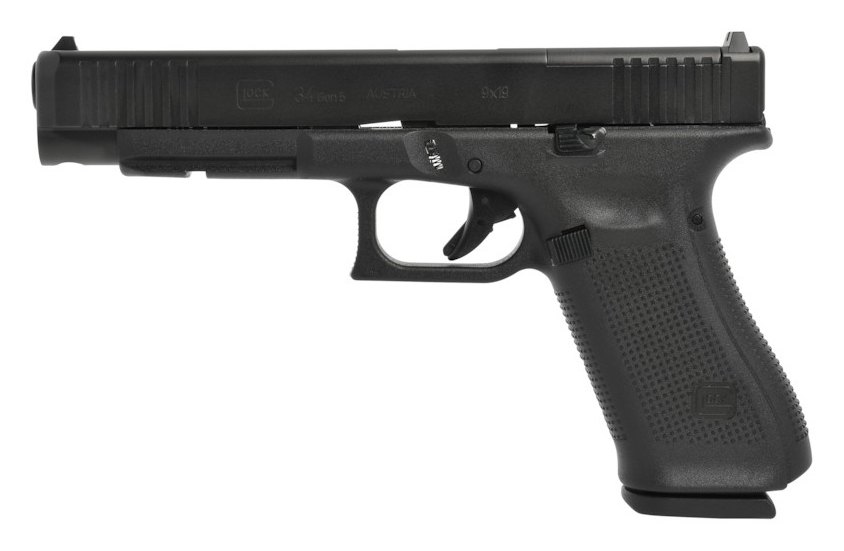
No hammer: a spring-loaded firing pin, partly cocked by the slide. That is the principle of the Glock 34 and the Walther PDP.
Pros
First shot: double action is the heaviest
The first shot
Trigger pull on the first shot, pistol ready to fire — manufacturer values
Values published by the manufacturers134567. The two dark bars are double-action-then-single-action pistols: their position flips in the next chart.
View the data
| Pistol | Action | First shot | In newtons |
|---|---|---|---|
| CZ Shadow 2 | Double then single action | 4,691 g | 46 N |
| Beretta 92X Performance | Double then single action | 3,000 g | 29.4 N |
| Walther PDP | Striker-fired | 2,500 g | 24.5 N |
| Glock 34 Gen5 | Striker-fired | 2,447 g | 24 N |
| Dan Wesson DWX | Single action only | 1,474 g | 14.5 N |
| Staccato XC | Single action only | 1,134 g | 11.1 N |
On the first shot, the two hammer-fired pistols take the top two places: 4,691 g for the CZ Shadow 2, 3,000 g for the Beretta 92X, where a Staccato XC needs 1,134 g. But that is only the first shot.
Following shots: double action drops below striker-fired
The following shots — the ranking flips
Same pistols: the trigger weight once firing has cocked the hammer
Nothing changes on the striker-fired or single-action-only pistols: their break is the same on every shot. The two hammer-fired pistols, however, go from the top of the ranking to the bottom. That is what the choice of action is about.
View the data
| Pistol | First shot | Following shots | Gap |
|---|---|---|---|
| Walther PDP | 2,500 g | 2,500 g | None |
| Glock 34 Gen5 | 2,447 g | 2,447 g | None |
| CZ Shadow 2 | 4,691 g | 1,530 g | 3,161 g |
| Beretta 92X Performance | 3,000 g | 1,500 g | 1,500 g |
| Dan Wesson DWX | 1,474 g | 1,474 g | None |
| Staccato XC | 1,134 g | 1,134 g | None |
Once the hammer is recocked by the recoil, the Shadow 2 drops to 1,530 grams and the Beretta to 1,500: below both striker-fired pistols in the table. Nothing moves for the others, whose break is the same on every shot.
A hammer-fired pistol therefore asks you to master two triggers instead of one, and gives in return a break that few striker-fired pistols reach. Our trigger guide details what happens inside each of these breaks.
First double-action shot: a transition to practice
On a Shadow 2, 3,161 g separate two consecutive shots, and habit alone does not bridge that gap. Two classic errors follow from it: jerking the first shot by pulling the pistol off target, and breaking the second too early, the hand still set for the first.
How much this transition matters depends on the event:
- In a precision discipline, where each shot counts on its own, the first break needs specific practice.
- In a dynamic event, where the first shot is one among thirty, the gap is diluted.
- Some rulebooks allow starting hammer cocked, which removes the question; others do not: IPSC Production requires starting with the hammer down8.
Our article on pistol eligibility by discipline helps place yours.
Double action: decocker or manual safety
On a hammer-fired pistol, the decocker lowers the hammer without pressing the trigger: it makes it possible to return to double action after chambering a round. Several models built on the same design come either with a decocker or with a manual safety, such as the CZ Shadow 2: a difference in handling, not in range2.
The manual safety blocks the trigger and the slide, hammer cocked; the decocker brings the hammer down to its safety notch, ready for a first shot in double action2. The choice between the two is made in the hand.
Choosing an action: it all depends on the discipline
What each action brings, and what it asks
In precision, where each shot counts on its own, single action only offers the lightest break with no transition. Double action there asks for practice on a first shot two to three times heavier than the following ones.
In dynamic shooting, where the first shot is one among thirty, the double-action gap is diluted, and its light following shots count for more.
For a beginner, striker-fired has only one break to learn. In return, that break is heavier.
When the division dictates it, the question is settled in advance: some rulebooks separate pistols by action, or by the position of the hammer at the start: IPSC Production excludes single-action-only pistols and requires starting with the hammer down8.
The weight printed on a spec sheet says nothing about the feel: trying the club's pistols supplies the rest of the answer. Our criteria for choosing a first pistol start from the event, not the model.
Sources 9 references
Trigger pulls come from the manufacturers' sheets and manuals, the operation of the actions from their user manuals, the rules from the IPSC rulebook. Click a reference number in the text to highlight the matching source.
- CZ — CZ Shadow 2, manufacturer specification sheet, re-read 24 September 2026: "DA 46 N / SA 15 N", or 4,691 g in double action and 1,530 g in single action.
- CZ — CZ Shadow user manual (PDF, 02/2025 edition, French text included), re-read 24 September 2026: in double action, "The hammer is cocked, released and the pistol fired by one pull of the trigger"; in single action, "After each discharge the hammer remains cocked"; versions "equipped with a manual safety" and versions "equipped with a decocking device"; the safety "blocks the trigger mechanism and slide"; the decocker lowers the cocked hammer to its safety notch "without any need to pull the trigger", the pistol remaining "ready for immediate use in a Double Action mode of fire".
- Beretta — Pistol User Manual 92X Performance (PDF, latest edition June 2022), re-read 24 September 2026: "Trigger pull (kg/oz) 3,0/105.8 double action; 1,5/52.9 single action".
- GLOCK — G34 Gen5 MOS, manufacturer specification sheet, re-read 24 September 2026: trigger pull 24 N (2,447 g).
- Carl Walther — PDP Full Size 5" (ref. 2851776), manufacturer specification sheet, re-read 24 September 2026: trigger pull 2,500 g, the same value on the sheets of the other PDPs (Match Polymer, F-Series, Steel Frame).
- CZ — Dan Wesson DWX, presentation by the group that owns the brand, 19 December 2022, re-read 24 September 2026: "you simply have to press 3.25 pounds of effort to drop the hammer", or 1,474 g.
- Staccato — Staccato XC, manufacturer specification sheet, consulted 20 August 2026: "Balanced 2.5lb Trigger", or 1,134 g.
- IPSC — IPSC Handgun Competition Rules, Jan 2026 Edition, Final 29 Dec 2025, link published by the official IPSC Rule Books page, re-read 24 September 2026: appendices D4 and D4a (Production, Production Optics) — "Handguns with external hammers must be fully decocked […] at the Start Signal. First shot attempted must be double action"; "handguns deemed by IPSC to be single-action-only are expressly prohibited".
- Images — manufacturer renders and photographs, reproduced without retouching, cropped to their content: Beretta, 92X Performance Production; Springfield Armory, 1911 Mil-Spec; Glock, G34 Gen5 MOS.
The action can decide your division. Some events separate pistols by action or by the position of the hammer when the timer starts, and these rules vary from one federation and one rulebook edition to another. Before a purchase guided by a division, the club's range officer confirms the model's eligibility.
Frequently asked questions
What is the difference between double action and single action?
In single action, the trigger only releases a hammer that is already cocked: the pull is short and light. In double action, the same pull cocks the hammer and then releases it: the pull is long and heavy. Most hammer-fired pistols combine the two — first shot in double action, then the recoil recocks the hammer and the following shots break in single action.
What is a striker-fired pistol?
A pistol with no hammer, in which a spring-loaded firing pin is partly cocked by the movement of the slide. The practical consequence: the break is identical on every shot, from the first to the last. For a beginner, that is a single weight to learn, with nothing to relearn between the first shot and the rest.
Is the first double-action shot a drawback in competition?
It depends entirely on the event. On a CZ Shadow 2, the first break weighs 4,691 grams against 1,530 for the following ones: in a precision discipline where every shot counts, that transition needs specific practice. In an event where the first shot is just one among many, the gap matters much less. Some rulebooks also allow starting with the hammer cocked; IPSC Production, on the contrary, requires a first shot in double action.
What is a decocker for?
To lower the hammer without pressing the trigger, and so to return deliberately to double action after chambering a round. Several models, such as the CZ Shadow 2, come either with a decocker or with a manual safety. It is a criterion to try in the hand, not to read on a spec sheet.
Which action for a first pistol?
Striker-fired simplifies learning: one trigger weight to learn, no transition. That said, a double-then-single-action pistol offers a much lighter trigger once the hammer is cocked, which helps accuracy. The choice depends on the discipline in view and on what the club has available to try.
Can you dry-fire without recocking?
That is a concrete advantage of double action: the trigger recocks the hammer on every press, so dry-fire practice runs on without working the slide between two breaks. On a striker-fired or single-action-only pistol, the slide has to be cycled after each dry shot.