Sport shooting pistol maintenance: clean, lubricate, replace
Published on · Updated on · 6 min read · Anthony Baillon
Verified by a gunsmithGlock and CZ ask for a pistol to be cleaned after every shooting session, through a simple field strip. It takes little lubrication, at the friction points only, and its barrel stays dry at the moment of shooting. A complete kit costs €35 to €56 in the first year.
At a glance
| Task | When | What the manuals say |
|---|---|---|
| Clean | After every session | Field strip, no further |
| Lubricate | After cleaning | One drop per friction point |
| Dry the barrel | Before shooting | Dry patch until it comes out clean |
| Check for wear | At every cleaning | Replace on condition |
- Budget: €35 to €56 in the first year (kit, oil, solvent), €25 to €31 in the following years, plus a recoil spring when it wears.
- Magazines: wiped dry, inside and out, never oiled.
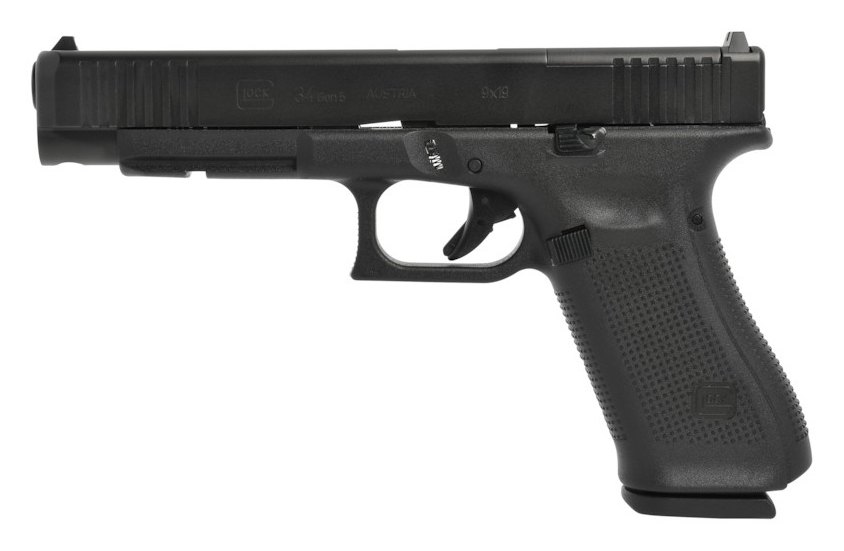
Cleaning your pistol after every shooting session
The two manufacturers whose manuals put a figure on frequency set the same pace. Glock asks for cleaning when new before the first shot, after every time it is fired, depending on exposure to rain, dust or sweat, after a drop or a malfunction, and at least once a year1. CZ asks for the same pace: after each use, as soon as possible after shooting, after every exposure to moisture, and at least once a year3.
Glock specifies that cleaning is done with the pistol taken down into its main parts: cleaning through the muzzle with the slide locked back builds up dirt and oil inside and causes malfunctions1.
The steps common to both manuals:
- Check that the pistol is unloaded, and that no ammunition is on the work surface: oil and solvent can stop a round from firing1.
- Field strip as described in the manual.
- Clean the barrel from the chamber end, so as not to damage the muzzle3.
- Clean the slide and frame with a cloth or nylon brush, with no bore solvent on the other parts3.
- Lubricate the friction points, then reassemble.
Lubricating a pistol: one drop per friction point
Glock lists the places to lubricate after cleaning1:
| Point | Amount |
|---|---|
| Outside of the barrel, lug and locking surfaces | A lightly oiled cloth |
| Inside of the slide, where the barrel rubs | A lightly oiled cloth |
| Where the trigger bar meets the connector | One drop |
| Each slide rail, along its full length | One drop, spread out |
The same manual warns that the pistol runs on very little lubricant: too much oil holds unburnt powder and debris, and stops the pistol from working1. Two places stay dry: the firing pin channel and the breech face, where oil can reach the primer1.
In severe cold, CZ asks for the oil to be removed from all accessible parts, or for a lubricant suited to low temperatures to be used3.
Pistol barrel: oiled for storage, dry for shooting
After cleaning, both manufacturers run a lightly oiled patch through the barrel, which protects it from corrosion in storage13. Before shooting, they run a dry patch through until it comes out free of oil13.
For a heavily fouled barrel, CZ lets a solvent work for about ten minutes, brushes, then dries and checks that no residue remains. The brush goes through the whole barrel before coming back the other way: changing direction halfway jams it in the rifling3.
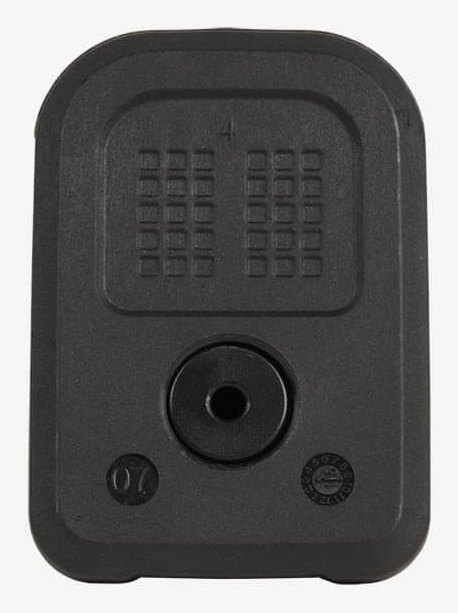
Magazine maintenance: wiped dry, inside and out
Glock asks for the magazine to be wiped dry, inside and out, before reassembly: oil left there can contaminate primers1. Its preventive maintenance booklet has magazines taken apart less often than the pistol, "perhaps every 3-4 months"2.
On a CZ, the base pad is released by a catch or a hole, and the spring comes out under tension: the thumb holds it back during disassembly3. The useful checks, feed lips, follower and spring, are detailed in our guide to pistol magazines. The magazine is also the first place to look after a pistol malfunction.
Stripping the pistol: field stripping is enough
Field stripping takes no special tools and gives access to everything that needs maintenance: barrel, recoil spring, slide and frame. Beyond that, CZ recommends no further disassembly, and leaves any adjustment or repair to a competent gunsmith3. Glock asks for eye protection during cleaning: springs under tension can fly out1.
Replacing wear parts: one interval in rounds published
| Manufacturer | What the manual says |
|---|---|
| CZ (Shadow 2) | Recoil spring guide buffer: replaced if worn, and as a precaution after 1,000 to 1,500 rounds3 |
| Glock | Cleaning and inspection scheduled by time, not by rounds12 |
| Smith & Wesson (M&P M2.0) | Wear checked at every cleaning5 |
| Beretta (92X), Walther (PDP) | No interval in rounds46 |
The other parts, recoil spring included, are therefore replaced on condition: erratic ejection, a slide that travels further back, cases jammed crosswise. A round count quoted in a manual is not always a maintenance deadline: the first 2,000 rounds of the Shadow 2 Target are a break-in, not a replacement3.
Writing down the date and round count at each replacement gives the only reference specific to your pistol: that is what a shooting logbook is for, beyond the regulations.
Pistol maintenance: €35 to €56 in the first year
| Item | Price found | Renewal |
|---|---|---|
| 9 mm cleaning kit (rod, brushes) | €10 to €257810 | Rarely |
| Ballistol oil, 200 ml aerosol | €8 to €11910 | Every year |
| Bore solvent (Parker Hale 009, Hoppe's) | €17 to €20810 | Every year |
| Factory Glock 17/34 Gen5 recoil spring | €24 to €301112 | When worn |
New prices found on 24 September 2026 at French gun shops. The budget reads per year:
- First year: €35 to €56, kit, oil and solvent.
- Following years: €25 to €31 of oil and solvent, plus €24 to €30 in the year the recoil spring is replaced.
Three misconceptions about pistol maintenance
- "A pistol gets cleaned every few thousand rounds." Glock and CZ ask for cleaning after every shooting session13.
- "Oil never belongs in the barrel." Both manufacturers oil it lightly for storage; it is at the moment of shooting that it must be dry13.
- "The more you lubricate, the better it runs." Glock warns that excess oil holds residue and stops the pistol from working1.
Sources 13 references
Maintenance instructions come from the manufacturers' manuals, in the edition stated for each; prices from dated surveys at several French gun shops, flagged ⚠️ as commercial data. Click a note marker in the text to highlight the matching source.
- Glock — Instructions for use, models G17 to G48 (PDF, edition 06/2026), reread on 24 September 2026: clean and lubricate the pistol "when brand new, before first time it is fired", "after each time it is fired", depending on exposure to rain, dust or sweat, after a drop or a malfunction, and "at least once a year"; clean with the pistol taken down, never through the muzzle with the slide locked back; barrel run through with a lightly oiled patch, then, before shooting, with a clean patch "until the patch comes out of the barrel with no gun oil or lubricant on it"; lubrication of the outside of the barrel, the inside of the slide, one drop where the trigger bar meets the connector and one drop per rail; "Do not over-lubricate"; "Do not put lubricant or gun oil inside the firing pin channel. Make sure that the magazine (inside and out) and breech face are wiped dry"; eye protection during cleaning.
- Glock — Preventive Maintenance of the GLOCK Semi-Automatic Safe Action Pistol (PDF, 7 pages). Service frequencies expressed in time and exposure, never in rounds; magazines taken apart "perhaps every 3-4 months"; armourer inspection "at annual intervals" for professional use.
- CZ — CZ Shadow user manual (PDF, edition 02/2025, French text included), reread on 24 September 2026: clean « après chaque utilisation » [after each use], « le plus tôt possible après le tir » [as soon as possible after shooting], after exposure to moisture, « au moins une fois par an » [at least once a year]; barrel cleaned from the chamber, solvent left to work for about ten minutes, brush run along the full length without changing direction; « Ne jamais utiliser le liquide de nettoyage pour l'intérieur du canon » [never use the bore cleaning fluid] on the other parts; storage with oil, then « Avant le tir, essuyer l'intérieur du canon avec un chiffon sec » [before shooting, wipe the inside of the barrel with a dry cloth]; at low temperatures, remove the oil or use a suitable oil; magazine taken apart through the base pad, spring under tension; "No further disassembly of your pistol is recommended", adjustments and repairs left to "a competent gunsmith"; recoil spring guide buffer: "Preventative replacements are recommended after firing approximately 1,000 to 1,500 rounds"; break-in of the first 2,000 rounds of the Shadow 2 Target in the malfunctions chapter.
- Beretta — Pistol user manual 92X Performance (PDF). No replacement interval in rounds; the word "round" only ever means the cartridge.
- Smith & Wesson — Safety & Instruction Manual, M&P M2.0 pistols (PDF). Maintenance on condition: "Every time you clean your firearm, check it for signs of wear."
- Walther — PDP Safety & Instruction manual (PDF, PDP Full Size 4" and 4.5"). No interval in rounds; the only values in rounds are magazine capacities.
- Gunmarket — handgun cleaning kit, 9 mm, .36, .38, .357, price found on 24 September 2026: €9.90. ⚠️ Commercial data.
- Armurerie Douillet — prices found on 24 September 2026: ECO Stilcrin pistol cleaning kit .38/9 mm €9.90; Parker Hale 009 solvent, 150 ml aerosol €16.90. ⚠️ Commercial data.
- Armurerie Auxerre — Ballistol universal oil spray, 200 ml, price found on 24 September 2026: €7.90. ⚠️ Commercial data.
- Le Pistolier — prices found on 24 September 2026: Browning pistol cleaning kit €24.99; Ballistol universal oil, 200 ml €10.50; Hoppe's cleaning solvent €20.00. ⚠️ Commercial data.
- Armurerie de la Bourse — Glock Gen5 dual recoil spring (17/34), price found on 24 September 2026: €30.00. ⚠️ Commercial data.
- Deville Armory — Glock 33786, recoil spring for Glock 17 Gen5, price found on 24 September 2026: €24.00. ⚠️ Commercial data.
- Visuals — manufacturer renders and photographs, reproduced without retouching, cropped to their content: Glock, G34 Gen5 MOS; Magpul, PMAG 17 GL9.
The pistol's manual prevails. The instructions cited apply to the models named. At the slightest doubt after disassembly, or with a damaged part, the work goes to a gunsmith.
Frequently asked questions
How often should a sport shooting pistol be cleaned?
After every shooting session, according to the Glock and CZ manuals, as well as after exposure to rain or dust, a malfunction or a drop. CZ adds a cleaning at least once a year even without shooting, and so does Glock.
Where should a pistol be lubricated?
At the friction points only, and sparingly. Glock lists four: the outside of the barrel and its lug, the inside of the slide where the barrel rubs, one drop where the trigger bar meets the connector, one drop along each slide rail. Too much oil holds powder residue and hampers function.
Should the inside of the barrel be oiled?
For storage, yes: Glock and CZ run a lightly oiled patch through it after cleaning. Before shooting, no: both manufacturers run a dry patch through until it comes out free of oil. The barrel is therefore oiled in storage and dry when shooting.
When should a pistol's recoil spring be replaced?
The Glock, Beretta, Smith & Wesson and Walther manuals give no interval in rounds: the part is replaced on condition, checked at each cleaning. CZ is the only one to put a number on a neighboring part, the recoil spring guide buffer, to be replaced as a precaution after about 1,000 to 1,500 rounds.
Can you fully strip your pistol yourself?
Field stripping, yes: it is designed for routine maintenance. Beyond that, CZ recommends no further disassembly and refers any adjustment or repair to a competent gunsmith.