Reloading log: recording your loads so they teach you something
Published on · Updated on · 6 min read · Anthony Baillon
Verified by a gunsmithA reloading log fits in eleven columns: eight for the assembled cartridge, three for what it gives on the range, group and distance included. It is kept on paper, with a printable template, or in a free spreadsheet. No rule requires it; it avoids running the same test twice.
At a glance
| Medium | Strength | Limit |
|---|---|---|
| Paper | Filled in at the bench, no screen | Neither sorts nor calculates |
| Spreadsheet | Sorts and compares strings | A screen near the bench |
- Eleven columns, including group and distance, without which a load teaches nothing.
- The French regulatory shooting logbook no longer exists since 1 July 2020: the reloading log is a personal tool.
- Measuring tools: a caliper at €49 to €55, the scale often being supplied with the press kit.
Reloading log: eleven columns, group included
A log row carries two things of a different nature: what was assembled, and what it gave on the range. The printable template further down carries these eleven columns:
| Column | What it allows |
|---|---|
| Date and caliber | Placing the string in time and equipment |
| Powder and lot no. | Attributing a difference to a change of lot |
| Charge | The variable most often changed |
| Primer, case | Finding the exact components again |
| Bullet and weight | The other variable that shapes the load |
| Overall length | Reproducing the cartridge identically |
| Distance, group | Measuring the result |
| Notes | Malfunction, conditions, feel of the shot |
Recording the assembly: eight columns per load
The first eight columns describe the cartridge. The powder maker Vectan points out that results « peuvent varier notablement » [may vary significantly] depending on the components used, and that a single component changed (primer, case, bullet) is treated as a new load, starting again from the minimum charge1. Each component therefore has its column.
- The lot number is on the container. Noting it on opening takes a few seconds; found again months later, it explains a group that changes with no other visible cause.
- The charge is written as weighed, in the unit of the table used, grains or grams.
- Overall length is measured with a caliper on a few cartridges from the batch.
The log contains no load data: charges come from the powder maker's tables, for the exact bullet and primer combination12. The French ceilings on reloaded rounds and powder are covered in French firearm and ammunition quotas.
Recording the result: distance and group
A load written down without its result remains a recipe. The log becomes useful when each row says what the load gave, in conditions comparable from one string to the next.
- Distance goes on every row: three centimeters at 25 meters and three centimeters at 50 meters do not describe the same thing.
- The number of rounds per string stays constant: a three-round group and a ten-round group do not compare.
- The notes keep track of a malfunction, a marked case or a flattened primer.
Reloading log: one variable at a time, load to load
Changing the charge, the bullet and the overall length between two strings leaves the log silent: it records that something moved without saying what. The method is that of any comparative test:
- Fixing the reference cartridge and writing it down in full.
- Changing a single column, in small steps, starting from the table's starting load1.
- Shooting strings of the same length, at the same distance, and writing down each group.
- Comparing the rows before changing variable.
The same reasoning serves to track a pistol's malfunctions: a variable not written down can never be held responsible.
Paper or spreadsheet reloading log: pros and cons
The paper log
Pros
- Filled in at the bench, hands busy, with no screen to protect.
- No cost: the template prints on an A4 sheet.
Cons
- Sorts nothing: comparing twelve strings means rereading everything.
- A single copy, to be stored safely.
Download the load tracking template (PDF, 1 page A4 landscape, 11 columns, 10 rows)
Landscape format leaves the eleven columns wide enough for handwriting. The sheet also carries an identification block: firearm, press and powder measure, last scale calibration.
The spreadsheet
Pros
- Sorts and filters by lot, bullet or charge.
- Free with LibreOffice Calc3.
- Calculates averages and differences from one string to the next.
Cons
- A screen near the bench, or entering everything twice.
- A structure to set at the start: same columns, same units.
Depending on how the log is used
For writing at the bench, paper follows the work without interruption. In return, comparing strings happens on rereading.
For comparing many strings, the spreadsheet sorts by lot, bullet or charge in one click. In return, it needs a screen within reach or copying out.
For both, writing on the printed sheet at the bench then copying into the spreadsheet at the end of the session combines the advantages, at the cost of one more entry.
Reloading log tools: budget per year
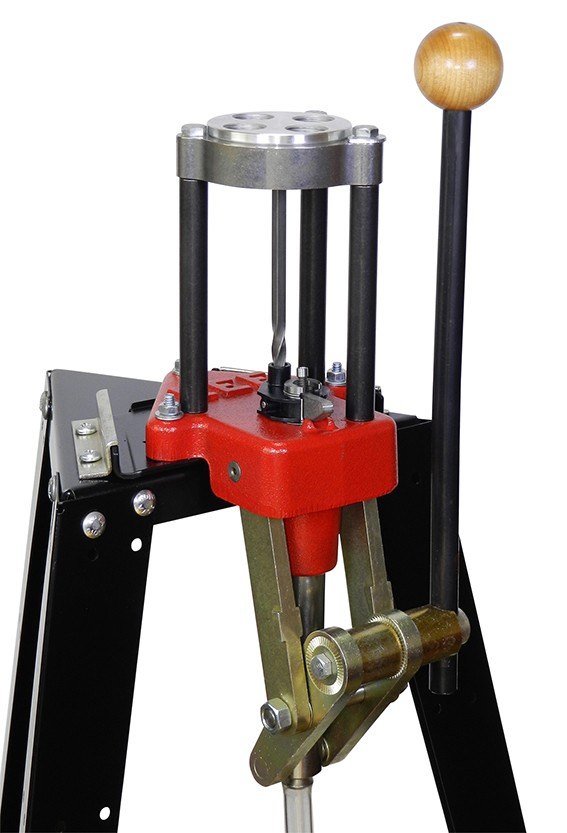
The charge and overall length columns assume a scale and a caliper. The Lee Classic Turret press kit already includes a scale4.
| Item | First year | Following years |
|---|---|---|
| Frankford Arsenal digital caliper | €49 to €5556 | — |
| Hornady M2 electronic scale (optional) | €306 to €34945 | — |
| LibreOffice Calc spreadsheet | €03 | €0 |
- First year: €49 to €55 with the kit's scale, €355 to €404 with an electronic scale.
- Following years: nothing, apart from paper.
Three misconceptions about the reloading log
- "A reloading log is compulsory." The French defense code makes making ammunition free, with no register required7.
- "It replaces the shooting logbook." The French regulatory shooting logbook no longer exists: article R312-43 was repealed on 1 July 20208. Controlled sessions fall under a separate system, described in the controlled sessions rule.
- "A load read in someone else's log can be reused as is." Any change of component is treated as a new load, starting from the minimum charge1.
Sources 8 references
The texts were reread on Légifrance in their version in force on 24 September 2026; prices were read the same day. French documents keep their French titles and quotations, with a short translation in brackets. Click a note marker in the text to highlight the matching source.
- Nobel Sport — Vectan, utilisation et sécurité (in French), consulted on 24 September 2026: « Il est essentiel que le rechargeur commence par la charge minimum, et augmente progressivement jusqu'à arriver à la charge idéale » [it is essential that the reloader start from the minimum charge and increase gradually up to the ideal charge]; « Si vous changez un seul des composants des chargements (amorce, marque ou type de la douille, marque de la balle, type ou poids) vous devez absolument appliquer les règles ci-dessus exactement comme si vous mettiez au point un nouveau chargement » [if you change a single component of the load (primer, case make or type, bullet make, type or weight) you must apply the rules above exactly as if developing a new load]; results that « peuvent varier notablement » [may vary significantly] depending on the components used.
- Nobel Sport — tables de rechargement Vectan, armes de poing (in French), consulted on 24 September 2026: for each calibre and each powder, bullet, primer, starting load and maximum load.
- The Document Foundation — LibreOffice (in French), consulted on 24 September 2026: « LibreOffice offre un accès illimité aux outils de productivité bureautique, sans coût pour vous » [LibreOffice offers unlimited access to office productivity tools, at no cost to you]; Calc spreadsheet included.
- Armurerie Steflo (Gleizé) — prices read on 24 September 2026: LEE Classic Turret Press Kit, €458.00, Safety Scale included; Hornady M2 Digital scale, €305.60. ⚠️ Commercial data.
- Armurerie Lavaux — prices read on 24 September 2026: Frankford Arsenal digital caliper, €48.95; Hornady M2 Digital Bench electronic scale, €348.95. ⚠️ Commercial data.
- Armurerie de la Bourse — Frankford Arsenal 672060 caliper, price read on 24 September 2026: €55.00. ⚠️ Commercial data.
- Légifrance — article R2352-73 du code de la défense (in French), version in force since 26 November 2009, consulted on 24 September 2026: « L'acquisition, le transport et la détention d'une quantité de poudre de chasse ou de tir à usage civil au plus égale à 2 kg ainsi que sa mise en œuvre en vue de la confection de munitions de chasse ou de tir à usage civil sont libres. » [acquiring, transporting and holding up to 2 kg of civilian hunting or shooting powder, and using it to make civilian hunting or shooting ammunition, are free].
- Légifrance — code de la sécurité intérieure, articles R312-40 à R312-43-1 (in French), consulted on 24 September 2026: article R312-43 repealed on 1 July 2020 by decree no. 2020-486 of 28 April 2020.
Reloading involves the safety of the shooter and those nearby. This log is a tracking tool, not a manufacturing guide: it replaces neither the powder maker's tables, nor the firearm's manual, nor the advice of the club's experienced reloaders.
Frequently asked questions
What should go in a reloading log?
Eleven columns: date, caliber, powder and lot number, charge, primer, case, bullet and weight, overall length, then distance shot, group obtained and notes. The first eight describe the assembled cartridge, the last three what it gave on the range.
Is a reloading log compulsory in France?
No. Article R2352-73 of the French defense code makes holding up to two kilograms of powder and making ammunition free, with no register required. The log is a personal working tool, with no official template.
Does a reloading log replace the shooting logbook?
No, and the French regulatory shooting logbook no longer exists: article R312-43 of France's internal security code was repealed on 1 July 2020. The controlled sessions required for a category B authorization fall under a separate system, unrelated to loads.
Can you reuse a load read in someone else's log?
No. A load written down holds for the firearm, the powder lot and the components it was recorded with. The powder maker Vectan asks that any change of primer, case or bullet be treated as developing a new load, starting from the minimum charge in its tables.
Paper or spreadsheet for a reloading log?
Paper is filled in at the bench, without a screen; a spreadsheet sorts and compares strings. A spreadsheet such as LibreOffice Calc is free. Writing by hand at the bench, then copying into a spreadsheet to compare, combines the two.