Pistol reliability: three notes per malfunction to find the cause
Published on · 6 min read · Anthony Baillon
A stoppage does not say where it comes from: the pistol, the ammunition lot and the magazine produce the same symptoms. What sets them apart is repetition. Three notes taken at each malfunction, pistol, lot and magazine number, point to the cause within a few sessions.
At a glance
| Over several sessions, the malfunctions… | Likely cause |
|---|---|
| follow a numbered magazine | The magazine |
| follow one lot, not the next | The ammunition |
| become rarer on their own | Break-in of a new pistol |
| follow the pistol, every magazine and lot | The pistol |
- To note at each malfunction: the pistol, the ammunition lot, the magazine number, and the session's round count.
- The right indicator: the rate per thousand rounds, never the raw number of malfunctions.
- On a new pistol: a falling rate is break-in, a steady rate is a fault.
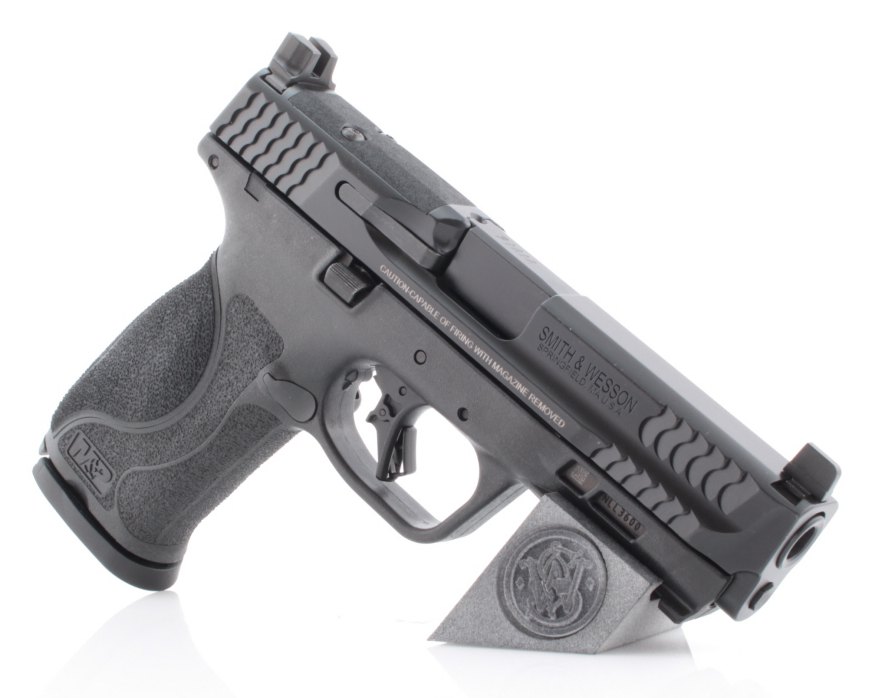
A single malfunction says nothing about pistol reliability
A feeding fault can come from a magazine's feed lips, an underpowered round or a fouled feed ramp: on the firing line, the symptom is the same in all three cases. Our guide to pistol malfunctions describes these symptoms one by one.
The diagnosis is therefore made on the series, not on the malfunction. And a series cannot be rebuilt from memory: nobody remembers, at the end of the season, which magazine was in the pistol during a session in March.
Tracking malfunctions: pistol, lot and magazine, every time
| To note | How | Cost |
|---|---|---|
| The pistol | Model, and the session's round count | None |
| The ammunition lot | Brand, bullet weight, lot number on the box | None |
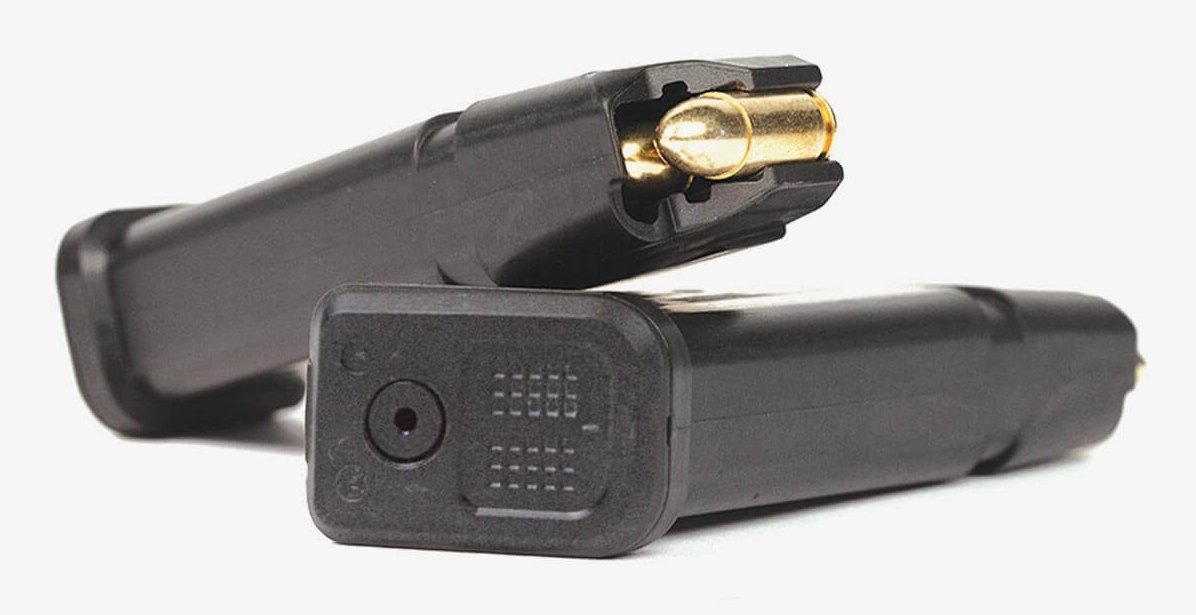
| The magazine | Its number | A mark on the base pad |
The first two notes cost nothing. The third assumes the magazines carry a number, which is rarely the case when they are bought.
Numbering magazines to track their malfunctions
A magazine without a number blends into the set: its malfunctions are blamed on the pistol, and it stays in service. Numbered, it gives itself away in two or three sessions. It is a wear part in its own right: Glock has magazines taken apart and cleaned at regular intervals, "perhaps every 3-4 months"2.
For the mark to be useful:
- Engrave or mark it on the base pad, somewhere that survives cleaning.
- Make it readable without taking the magazine out of the pocket or pouch.
- Rotate the magazines in the same order every session, or note the order: a magazine always used at the end of a session, with the pistol hot and fouled, piles up malfunctions that are not its own.
The checks to carry out next on the magazine identified, feed lips, follower and spring, are in our guide to pistol magazines.
Malfunction rate: per thousand rounds fired
The calculation fits on one line: malfunctions ÷ rounds fired × 1,000. Three malfunctions over a thousand rounds make three per thousand. The same number of malfunctions describes very different situations depending on the volume fired.
Three malfunctions, four rates: the volume fired makes the figure
Rate per thousand rounds obtained with the same number of malfunctions, three, depending on the number of rounds fired
Calculation: malfunctions ÷ rounds fired × 1,000. The number of malfunctions is the same in all four cases; only the volume fired changes. Two magazines can therefore only be compared after comparable volumes.
View the data
| Volume fired | Malfunctions | Rate per thousand |
|---|---|---|
| 200 rounds | 3 | 15 |
| 500 rounds | 3 | 6 |
| 1,000 rounds | 3 | 3 |
| 3,000 rounds | 3 | 1 |
Three malfunctions make fifteen per thousand over two hundred rounds and one per thousand over three thousand. Two magazines, or two lots, can only be compared after volumes of the same order.
No manufacturer publishes an acceptable rate. What counts as a signal is an attributable repetition: the same variable involved over several separate sessions. Three malfunctions on magazine no. 4, over three sessions, while magazines 1 to 3 produce none, point to magazine no. 4, whatever the pistol's overall rate.
New pistol malfunctions: break-in shows in the trend
CZ warns that on the Shadow 2 Target, difficult cocking of the slide during the first 2,000 rounds or so may come with slide-lock and ejection failures, to be dealt with by careful lubrication of the slide rail. The manual adds that in no case should the recoil spring be replaced with a weaker one1. Glock, for its part, notes that the firing pin of a new pistol may not move freely until several hundred rounds have been fired2.
Break-in and a fault can start from the same rate at the first session. What separates them is how it evolves:
- Break-in: the rate falls from session to session, without changing anything.
- A fault: the rate stays steady, or rises.
Hence the value of having measured before modifying anything: replacing a spring to stop break-in malfunctions removes the symptom and installs a lasting problem.
Pistol at fault: after the magazine, lot and break-in
The pistol comes last. Two cases arise.
- Malfunctions on a pistol that did not produce any: something has changed. A lot, a new magazine, a skipped cleaning, a spring at the end of its life. Wear parts are judged on these signs, since most manufacturers publish no interval in rounds: see pistol maintenance.
- Malfunctions from the start, which do not fall after the stated break-in: the matter is one for a gunsmith. The log gives dates, lots and magazine numbers, for example "four per thousand over 1,200 rounds, all magazines and two lots combined".
Three misconceptions about pistol reliability
- "A weaker spring cures a new pistol's malfunctions." CZ forbids it in so many words for the Shadow 2 Target: the remedy for break-in is lubricating the rail1.
- "A reliable pistol never jams, even when new." Two manufacturers document a break-in period, from several hundred to about 2,000 rounds depending on the model12.
- "Three malfunctions is a lot." It all depends on volume: fifteen per thousand over two hundred rounds, one per thousand over three thousand.
Shooting logbook: one line per session is enough
The useful log is short: one line per session, with the three variables and the volume fired.
| Column | Example |
|---|---|
| Date and pistol | 12 March, pistol A |
| Rounds fired | 150 |
| Ammunition lot | 124 grains, lot 7 |
| Magazines used | 1, 2, 4 |
| Malfunctions and magazine in use | 1 failure to eject, magazine 4 |
The medium matters little, as long as it follows the pistol from one session to the next.
The paper logbook
Pros
- Filled in on the firing line, with no phone or battery.
- Kept in the gun case, it follows the pistol from one session to the next.
Cons
- The rate is worked out by hand, magazine by magazine.
- A logbook fills up: the history of several seasons gets scattered.
The spreadsheet
Pros
- The rate calculates itself, per magazine or per lot, with a filter.
- The history stays readable over several seasons.
Cons
- Rarely filled in on the spot: notes from the range are copied up in the evening, with the risk of forgetting a malfunction.
Sources 3 references
Break-in instructions come from the manufacturers' manuals, in the edition stated for each. Click a note marker in the text to highlight the matching source.
- CZ — Instruction manual CZ Shadow (PDF, edition 02/2025), malfunctions chapter, consulted on 7 August 2026: "Due to the special features of CZ Shadow 2 Target, the difficult cocking of the slide during the first approximately 2,000 rounds can be accompanied by occurrence of the "Slide failure to lock" and "Failure to eject" malfunction, which should be prevented by thorough lubricating of the slide guide. In no case the recoil spring shall be replaced with a weaker one!" ⚠️ This passage concerns one specific model, the Shadow 2 Target.
- Glock — Preventive Maintenance of the GLOCK Semi-Automatic Safe Action Pistol (PDF, 7 pages), firing pin channel inspection step, consulted on 7 August 2026: "Firing pins on brand new pistols may not move freely until several hundred rounds have been fired."; magazines taken apart "perhaps every 3-4 months".
- Visuals — manufacturer renders and photographs, reproduced without retouching, cropped to their content: Smith & Wesson, M&P9 M2.0 Optics Ready; Magpul, PMAG 17 GL9.
This method attributes, it does not repair. It replaces neither the pistol's manual nor a gunsmith's opinion. At the slightest unusual behavior, a noise, abnormal recoil or a suspected obstruction, shooting stops and the pistol goes to a gunsmith, without waiting to build up a series.
Frequently asked questions
How can you tell whether a stoppage comes from the pistol, the ammunition or the magazine?
By noting all three at each malfunction, then comparing over several sessions. A single malfunction cannot settle it: the three causes produce the same symptoms. If the malfunctions follow a numbered magazine, it is the magazine. If they appear with one ammunition lot and disappear with the next, it is the lot. If they persist whatever the magazine and the lot, the pistol is at fault.
How is a malfunction rate calculated?
Number of malfunctions divided by number of rounds fired, multiplied by a thousand. Three malfunctions over a thousand rounds make three per thousand. Relating it to a thousand rounds makes two sessions comparable: three malfunctions over two hundred rounds (15 per thousand) and three over three thousand (1 per thousand) describe two very different pistols.
How many malfunctions before a pistol has a problem?
No manufacturer publishes a threshold. What counts as a signal is an attributable repetition: the same magazine, or the same lot, involved over several separate sessions. Three malfunctions on the same numbered magazine, spread over three sessions, say more than an overall rate.
Are malfunctions on a new pistol normal?
Some are, and two manufacturers say so in writing. CZ warns that the Shadow 2 Target may have slide-lock and ejection failures during its first 2,000 rounds or so, to be dealt with by careful lubrication of the slide rail, never by a weaker recoil spring. Glock notes that the firing pin of a new pistol may not move freely until several hundred rounds have been fired.
Should you number your magazines?
It is the most useful step in the method, and the cheapest. Without a number, a faulty magazine blends into the set and its malfunctions are blamed on the pistol. With a number engraved or marked on the base pad, it gives itself away in two or three sessions.